Leheriya Saree Online: Wave Prints and Chevron Designs for Every Occasion
Rajasthan gave us leheriya first, tying and dyeing fabric by hand until it carried soft wave stripes that catch light with every fold of the pallu. Chevron came later, taking that same wave and squaring it off into a sharper zigzag. Both sit under one roof at Loominators, so instead of scrolling endless prints hoping something clicks, you can shop by what the day actually calls for.
Whether you’re after a leheriya saree for wedding season or a chevron print saree for a Tuesday at work, start with the occasion below and work backward from there.
Wedding and Reception Wear
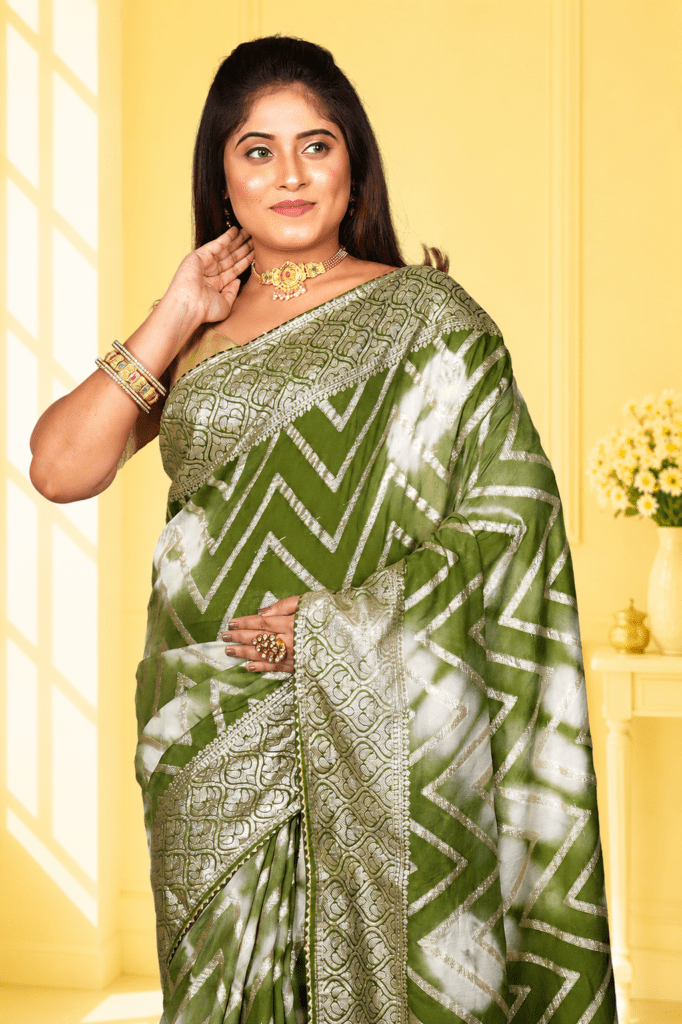
A wedding is where a leheriya printed saree design gets to carry real weight. Pure silk or organza in maroon, royal blue or deep mustard holds its own against function lighting, especially with a zari border doing the heavy lifting at the edge. Our Chevron / Leheriya Printed Saree with Woven Zari Border was built with exactly this in mind, the wave print carrying the story while the woven border adds the shine a wedding guest actually needs.
A few things that help this look land:
- Keep the blouse heavier than usual, embroidered or brocade, so it matches the border’s weight
- Lean into rich, saturated colour rather than pastel
- Save the statement jewellery for this one, temple sets and jhumkas work best here
Durga Puja and Festive Days
Puja means pandal-hopping from morning to night, so the saree needs to survive the day and still look sharp by evening aarti. Soft silk or cotton-silk in coral, turmeric or teal keeps festive energy without a full silk drape’s weight. It’s also a nice place where Rajasthan’s tie-dye tradition sits next to Bengal’s own festive dressing, one region’s craft worn against another’s celebration. Keep the blouse simple and let the print do the talking.
Office and Semi-Formal Wear
This is chevron print saree territory. The zigzag reads sharper and more structured than the softer leheriya wave, which suits a boardroom better than a wedding hall. Georgette or chiffon in grey, dusty pink or sage keeps things polished without pulling focus. Pair it with:
- A plain or lightly textured blouse
- Minimal, oxidised jewellery
- A low bun rather than an elaborate style
It’s the version of the collection meant for repeat wear, not a once-a-year event.
Everyday and Weekend Wear
Cotton leheriya, or a lighter chevron print in a breathable fabric, works for a casual lunch or a weekend visit home. These pieces are priced for regular rotation, wash easily and drape without much fuss even on a day you’re moving around a lot.
Leheriya or Chevron? The Quick Difference
Leheriya is a hand tie-dye technique, so the wave stripes come out slightly irregular, each one carrying a small trace of the artisan’s hand. Chevron is a printed zigzag, more precise and geometric, usually machine-printed rather than tied. If you’re deciding between a leheriya saree online purchase and a chevron print saree, think about the event first. Leheriya leans traditional, chevron leans contemporary.
Caring for Your Saree
Dry clean the first wash, especially for silk or organza pieces. After that:
- Use a mild detergent and cool water for cotton or georgette
- Skip direct sunlight while drying
- Store folded in a muslin cloth, not plastic, which traps moisture and dulls the print over time
Frequently Asked Questions
What is a leheriya saree?
It’s a saree made using Rajasthan’s traditional tie-and-dye method, producing wave-like stripes across silk, georgette or cotton.
Is chevron print the same as leheriya?
Not quite. Chevron is a printed zigzag, while leheriya is hand tie-dyed with roots in Rajasthani craft. They often sit in the same collection because of how visually close they are, but the technique and origin differ.
Which fabric works best for a leheriya saree for wedding functions?
Pure silk or organza with a zari border holds up best, the weight and sheen suit festive lighting and heavier jewellery.
Can I wear a chevron print saree to work?
Yes, a georgette or chiffon chevron saree in a muted tone reads structured enough for office and semi-formal settings.