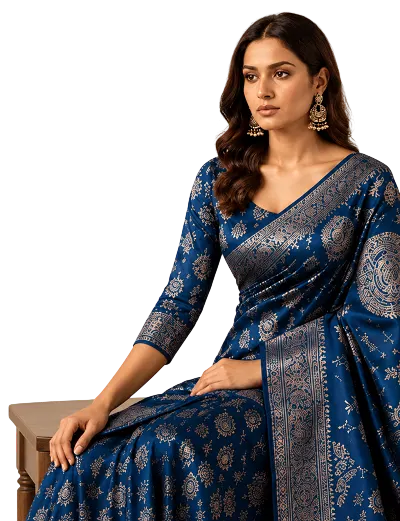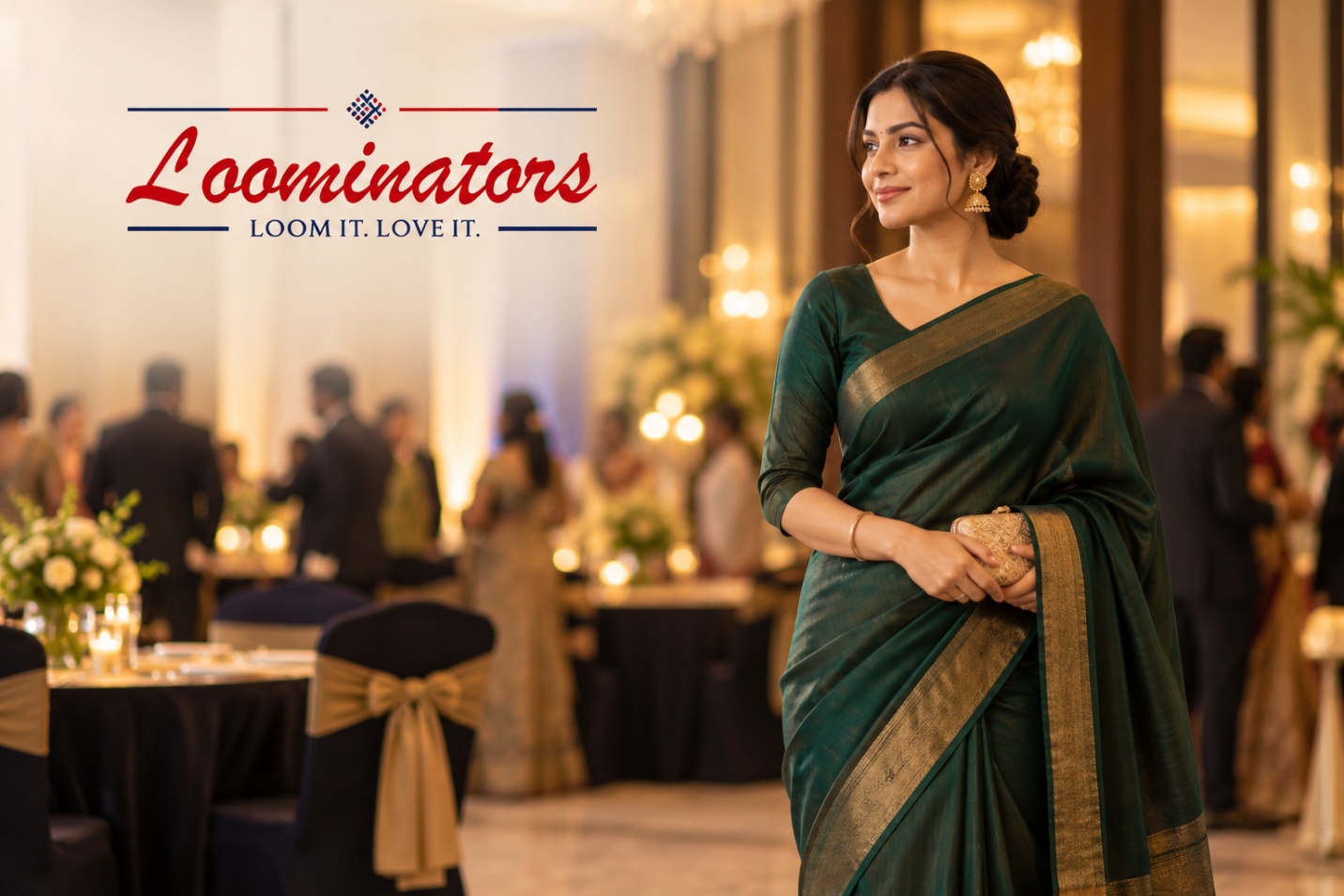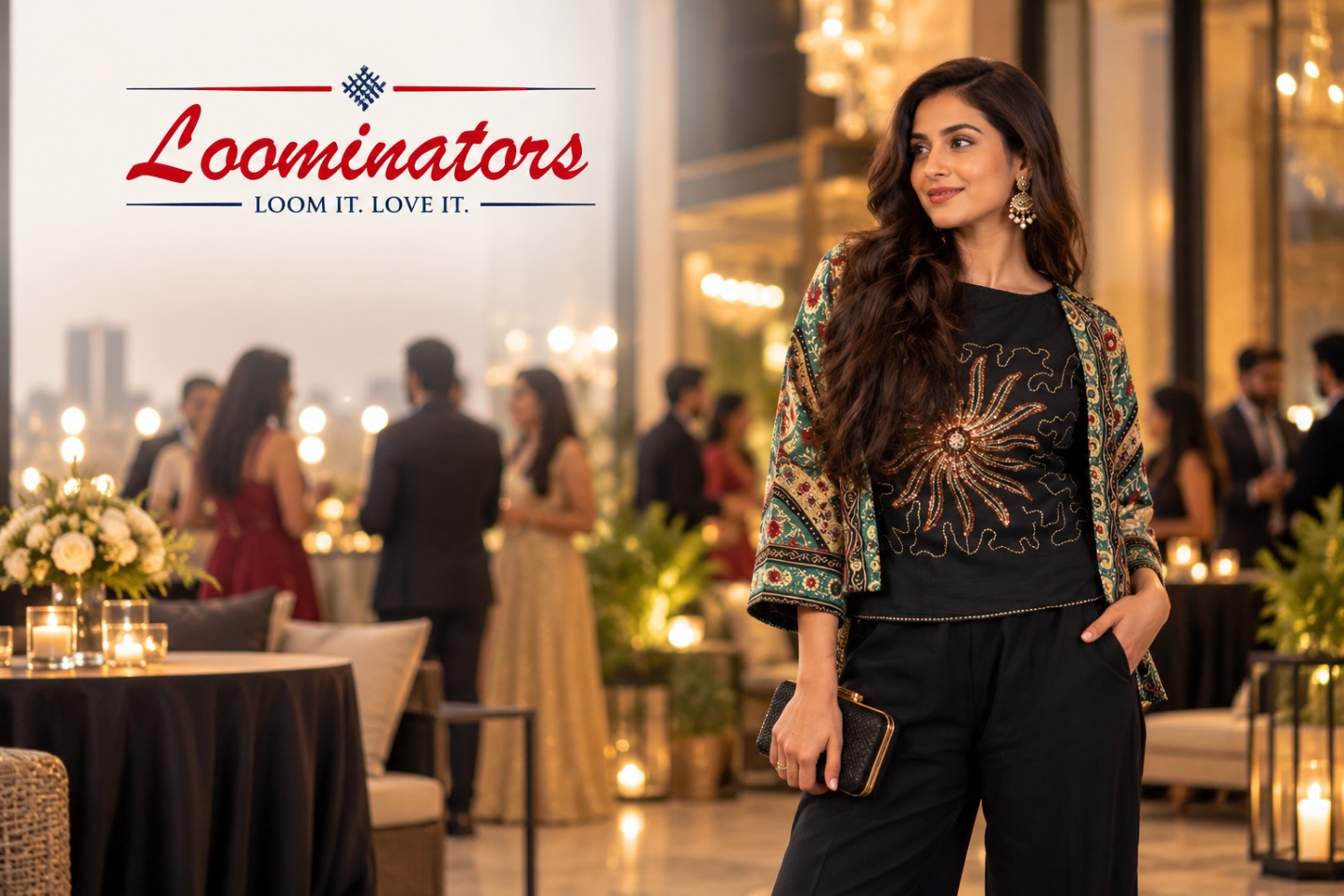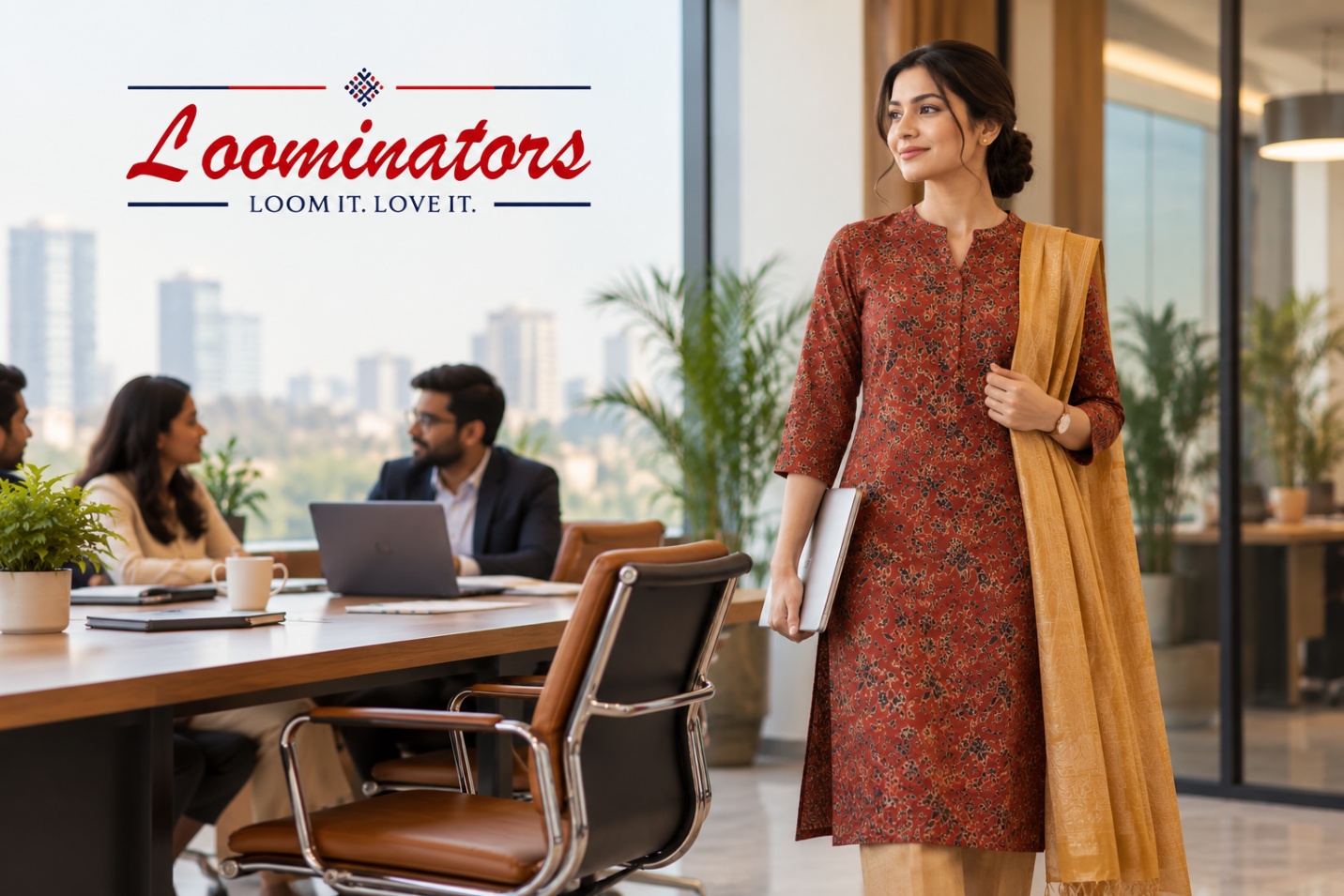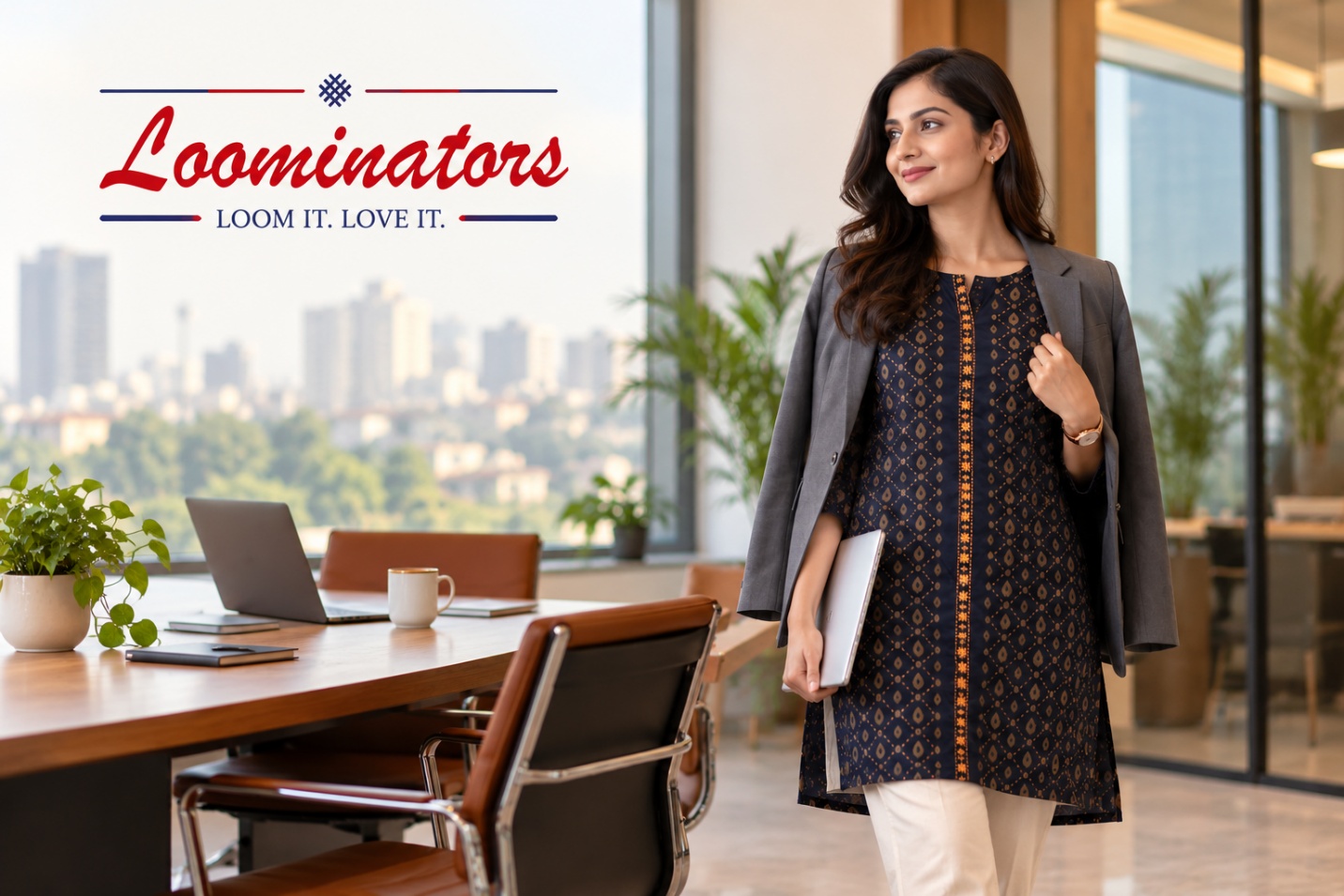

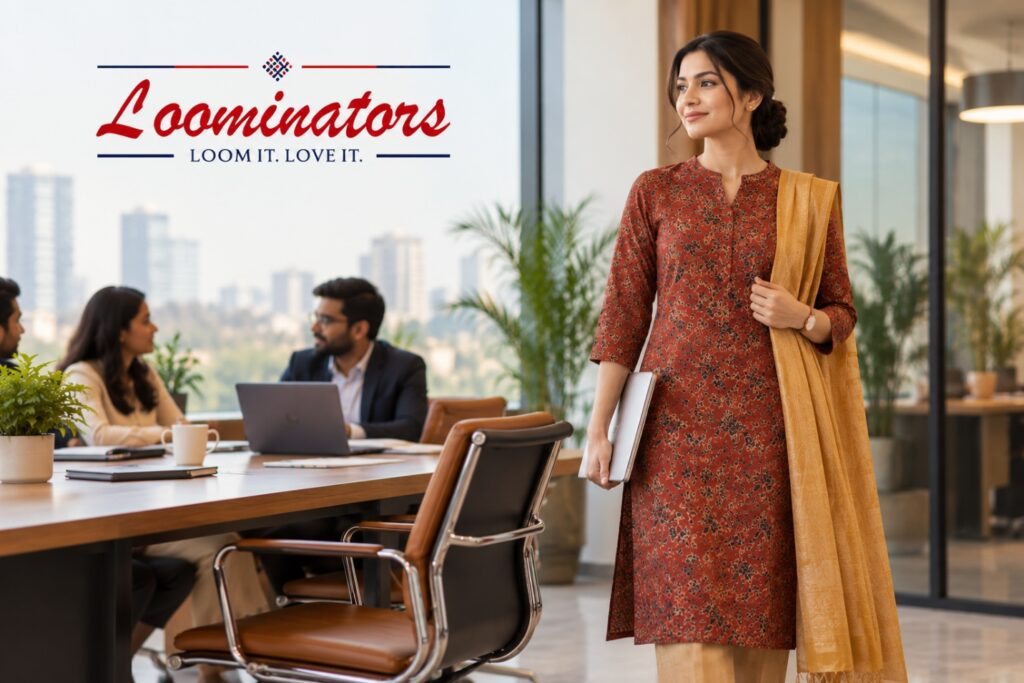
Professional Indian formal wear for ladies for office comes down to structure, not price. A straight-cut kurta in a deep solid colour, worn with tailored trousers and a crisp dupatta or jacket, looks as formal as any blazer. So does a handloom saree in a muted shade with a three-quarter-sleeve blouse.
What makes the same kurta look casual on one person and boardroom-ready on another? Usually three things: how it’s cut, how it’s pressed, and what it’s paired with. The rules below cover all of them.
9 rules for professional Indian formal wear at the office
- Pick straight or A-line cuts over anarkalis and flared silhouettes. A straight kurta that ends just below the knee is the closest Indian equivalent of a tailored dress.
- Keep colours deep or quiet. Navy, maroon, bottle green, charcoal, rust and ivory all read professional. Neon, glitter and multi-colour prints read festive.
- Choose small prints or none. Micro-florals, pinstripes, tiny buttis and fine checks are fine. Large placement prints belong at a mehendi.
- Fabric should hold its shape. Cotton, cotton-silk, chanderi, linen blends and crepe all do. Thin georgette and see-through rayon don’t, at least not without a lining.
- Sleeves matter more than people think. Three-quarter and elbow-length sleeves look more formal than sleeveless. If you love sleeveless kurtas (plenty of us do in May), add a jacket.
- Pair with structured bottoms. Cigarette pants, straight trousers and churidars look sharp. Palazzos work too, but only if they’re solid and fall straight rather than flaring wide.
- Treat the dupatta as an accessory, not a cover-up. Pin it on one shoulder or drape it neatly in a U. A dupatta sliding off every five minutes undoes the whole look.
- Press it. Properly. A creased kurta looks casual no matter what it cost. Cotton needs a hot iron with a little steam; silk needs a press cloth.
- Edit the accessories. One watch, small studs or a thin chain, and a structured bag. Heavy oxidised jewellery and stacked bangles that clink on a keyboard belong to weekends.
That’s the whole rulebook. Most professional Indian outfits break none of the nine, and most “too casual” ones break two or three at once.
Matching the outfit to the moment
Office life isn’t one dress code. An appraisal, a client pitch and the annual puja all ask for something different. This is how we’d dress for each.
| Work moment | What to wear | Why it works |
|---|---|---|
| Job interview | Solid straight kurta with cigarette pants and a pinned dupatta, or a plain cotton-silk saree | Neutral, comfortable for a long wait, nothing to adjust mid-answer |
| Client meeting or pitch | Dark kurta set with a structured jacket, or a handloom saree with a narrow border | Looks senior; the jacket adds authority without going fully western |
| Presentation or appraisal | 3-piece kurta set in a single deep colour | Head-to-toe colour looks taller and more put-together on camera and on stage |
| Conference or offsite | Linen-blend kurta with straight trousers and flat juttis | You’ll walk a lot. Comfort first, polish second |
| Office puja, annual day, Diwali party | Bishnupuri or Baluchari silk saree, or a kurta set with light zari | The one day a little shine is expected, so use it |
If you’re interviewing, pick the outfit you’ve worn before. A saree you drape twice a year isn’t the thing to test on the day you most need to focus.
Saree, suit or kurta set: which one for which role?
The saree is still the most formal thing an Indian woman can wear to work. In banks, government offices, schools and senior leadership roles it often outranks a western suit. The catch is practice. If draping takes you 25 minutes and two attempts, save it for days when you can spare the time. Our handwoven loom sarees in cotton are a good place to start, since they’re lighter than silk and forgiving to drape. For the bigger days, a bishnupuri silk saree gives you sheen without the weight of a Banarasi.
The salwar suit is the most practical. It handles commutes, site visits and long hours better than anything else on this list. A well-fitted salwar suit in a solid colour, with the dupatta pinned, is completely professional.
The kurta set is the everyday middle ground. A cotton kurti with straight pants is what most women in Indian offices actually wear Monday to Thursday. Step up to a coordinated 3 piece kurti set when you want the same comfort with more polish.
Working somewhere more western? Indo-western pieces bridge the gap. A sleeveless straight kurta under one of our cotton jackets for women looks sharp in a consulting office and still feels like you.
Shoes, hair and the small stuff
Juttis, block-heel sandals and closed-toe flats all work with Indian formal wear. Kolhapuris are fine for business casual but too relaxed for an interview. Heels are optional; a scuffed heel is worse than no heel.
Hair tied back or neatly left open both look professional. What doesn’t is constantly pushing it off your face during a meeting.
Bags should stand up on their own. A soft jhola bag is lovely for weekends but slumps on a conference table.
And a bindi? Entirely your call. A small one fits any office in India.
Mistakes that make ethnic wear look casual
The most common one we see is the festive kurta pressed into weekday service. It has mirror work, it’s comfortable, it’s in the wardrobe, so it goes to the office. And it looks like you’re heading to a cousin’s sangeet after work.
Second is the faded kurta. Cotton loses colour with every wash, and navy that’s turned slate looks tired. Wash dark cottons inside out in cold water and dry them in the shade. Kolkata’s afternoon sun bleaches a black kurta in a single season.
Third: wrong lengths. Kurta length should work with the bottom. Long kurtas go with slim pants, shorter ones with straighter, wider trousers. Getting this wrong makes even good fabric look off.
And last, the see-through test. Stand near a window before you leave home. If light shows through, wear a slip or swap the outfit.
Putting it together
Start with what you’ll wear most: three solid or micro-print kurtas, two pairs of straight trousers and one jacket. That alone gives you a professional week. Add one handloom saree and one 3-piece set for the moments in the table above.
If your workplace also expects western formals some days, our guide to womens corporate wear breaks down each dress code. For a full weekly rotation of Indian looks, see our edit of indian office wear for ladies.
Every piece mentioned here is on Loominators, with free shipping on prepaid orders, COD across India and 7-day returns. If you’re stuck between two sizes or two colours for an interview outfit, send us a WhatsApp at +91 98300 54954 and we’ll help you choose.
Frequently Asked Questions
Which Indian dress is best for office wear for ladies?
A straight-cut kurta with cigarette pants or straight trousers. It’s comfortable for eight hours, easy to press and accepted as formal in almost every Indian workplace. For senior or very formal settings, a handloom or cotton-silk saree.
How do I make my kurti look formal for office?
Pick a solid or micro-print kurti in a deep colour, pair it with structured trousers rather than leggings, press it well, and add a jacket or a neatly pinned dupatta.
Which saree is best for office wear?
Cotton, cotton-silk, chanderi and light handloom sarees. They breathe, hold pleats, and look polished without shine. Keep borders narrow for daily wear.
Can I wear a salwar suit to a job interview?
Yes, and it’s one of the safest choices. Go for a solid colour, a pinned dupatta and minimal jewellery.
Is a sleeveless kurta okay for office?
On business-casual days in most private offices, yes. For interviews, client meetings and conservative workplaces, layer it with a light jacket or shrug.
What should I avoid wearing to office in Indian wear?
Heavy embroidery, mirror work, sequins, very sheer fabrics, oversized placement prints and noisy jewellery. If you’d wear it to a wedding function, leave it for the weekend.