
What You’ll Know After Reading This
- What separates a handloom saree from powerloom and printed imitations — and why it changes the price
- Where Bengal’s saree-weaving clusters are and what each is known for, from Shantipur cotton to Bishnupur silk
- Real price ranges by weave, from everyday Tant cotton to wedding-grade Baluchari and Banarasi-style silk
- Five signals that separate a genuine listing from a vague one, and four myths that stop first-time buyers from trying handloom at all
A good handloom saree is easy to fall in love with and surprisingly easy to get wrong when you’re buying it online — a screen can’t tell you how a weave feels, and not every seller labelling something “handloom” is being accurate. This guide walks you through where these weaves actually come from, exactly what to check before you buy, how prices break down by weave, and which styles are worth adding to your wardrobe in 2026 — whether you’re shopping for daily wear, a festive occasion, or a wedding.
Bengal’s Handloom Heritage: Where These Weaves Actually Come From
Bengal has been one of India’s major weaving regions for centuries, and the handloom trade here is still organised around a handful of specific clusters, each known for a different technique. Knowing where a weave comes from is one of the fastest ways to tell a well-informed seller from a vague one — and its useful context before you look at the price table below.
| Weaving Region | Known For |
|---|---|
| Shantipur & Phulia (Nadia district) | Fine handloom cotton, everyday Tant sarees, crisp borders |
| Bishnupur (Bankura district) | Baluchari and Bishnupuri silk, storytelling motifs woven directly into the pallu |
| Murshidabad | Mulberry silk weaving, the source of Murshidabad silk sarees |
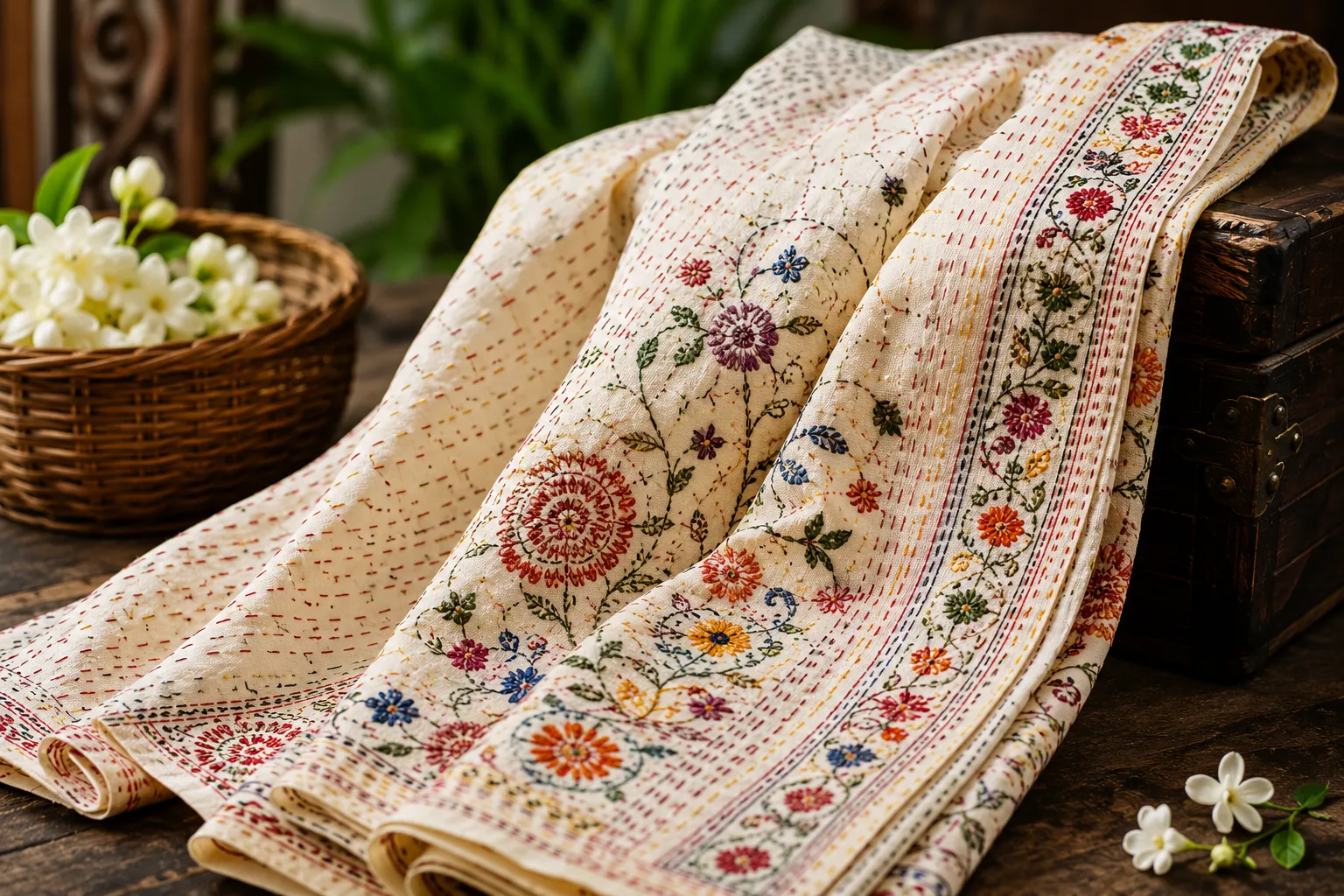
| Birbhum and surrounding districts | Kantha stitch embroidery on cotton and silk |
This is also where our price table below gets its structure — Tant from the Shantipur belt sits at the accessible end, while Bishnupuri and Baluchari silk from Bishnupur carry a higher price because of the weeks of skilled handwork each piece takes. For a closer look at one weave specifically, see our [https://loominators.in/collection/saree] which covers the katan weave, origin, and current pricing in more depth.
What Actually Makes a Saree “Handloom”?
A handloom saree is woven by hand on a manually operated loom, thread by thread — no electricity, no mechanised shuttle. This is different from a powerloom saree, which is machine-made and can be produced far faster and cheaper, and different again from a printed saree, where a plain fabric is block-printed or digitally printed to imitate a woven pattern.
The distinction matters because it directly affects price, durability, and authenticity — and it’s also where a lot of online listings get loose with terminology. A saree can be handwoven in a simple weave, or handwoven with intricate motifs like Jamdani or Baluchari, but either way, genuine handloom involves a weaver at a loom, not a machine.
How to Identify a Genuine Handloom Saree Before You Buy
Since you can’t touch the fabric before ordering, look for these signals on the product page or from the seller:
- Small irregularities in the weave. Handloom fabric has minor, natural variations — a slightly uneven border, subtle thread differences. Perfectly uniform patterns usually mean powerloom or print.
- GI tag or Silk Mark certification, where applicable. Sarees like Garad and several Bengal silk weaves carry Geographical Indication recognition; genuine sellers will mention it.
- Specific weave and origin named, not just “handloom saree.” A seller who tells you it’s a Tant from Shantipur or a Baluchari from Bishnupur is giving you something you can verify. Vague listings are a caution sign.
- Price that makes sense for the weave. A hand-embroidered Kantha stitch silk saree or a Baluchari with detailed motifs takes weeks of skilled labour — it won’t be priced like a printed cotton saree. If a “pure silk handloom” saree is priced like mass-market polyester, question it.
- Real product photography, ideally showing the actual piece, close-ups of the border and pallu, and fabric texture — not just a styled stock photo.
- A reverse-side photo on request. A genuinely handwoven piece — especially detailed Baluchari or Jamdani work — shows deliberate, structured threadwork on the back. A seller who can’t or won’t share this is worth a second look.
- Clear fabric and care details — cotton, silk, tussar, blend — spelled out, not left ambiguous.
Handloom Saree Price Ranges: What to Expect
Prices vary a lot by weave complexity, fabric, and how much handwork is involved. As a rough guide for what you’ll typically find shopping online:
| Saree Type | Typical Price Range | Best For |
|---|---|---|
| Handloom cotton (Tant, block print, batik) | ₹1,500 – ₹5,000 | Daily wear, office, summer |
| Tussar silk / Kantha stitch | ₹9,000 – ₹13,000 | Festive wear, gifting |
| Bishnupuri / Murshidabad silk | ₹7,500 – ₹11,500 | Festive, semi-formal occasions |
| Baluchari silk | ₹8,500 – ₹15,000 | Weddings, special occasions |
| Banarasi-style silk with zari work | ₹8,500 – ₹13,500 | Weddings, bridal functions |
These are general ranges, not fixed prices — heavier zari work, pure silk vs blended fabric, and hand-embroidery all push things higher within each category.
How to Choose the Right Handloom Saree for You
- For daily and office wear — go with lightweight handloom cotton. Tant and block-printed cotton sarees are breathable, easy to drape, and hold up well to regular wear and washing.
- For festive occasions (Puja, family functions, parties) — Kantha stitch, Tussar silk, and Bishnupuri silk strike a good balance between comfort and richness. They photograph beautifully without the weight of heavy bridal silk.
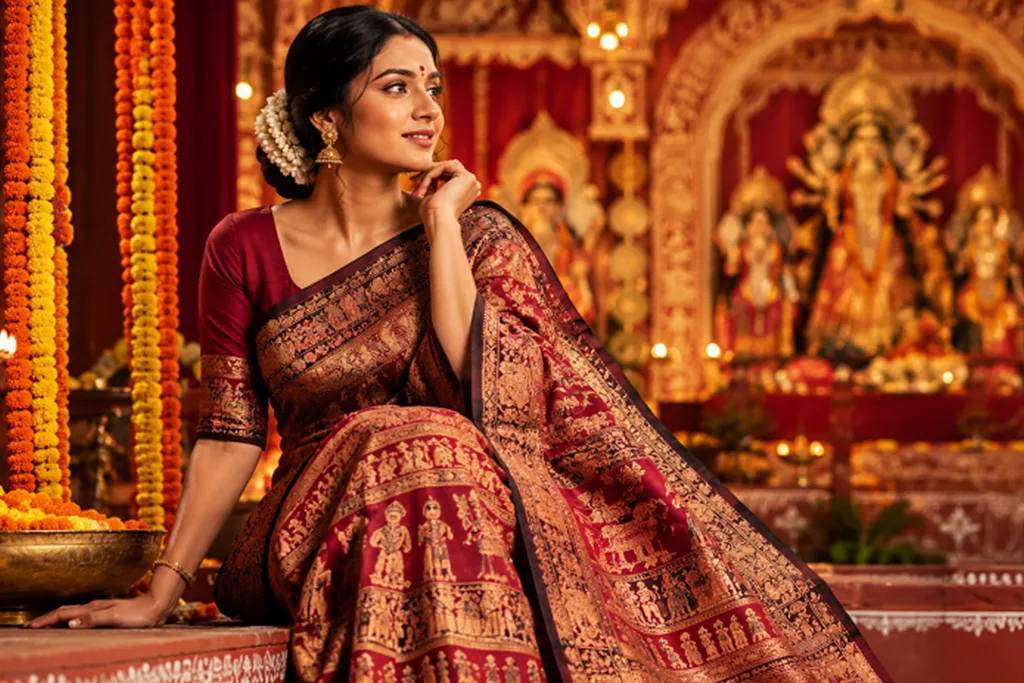
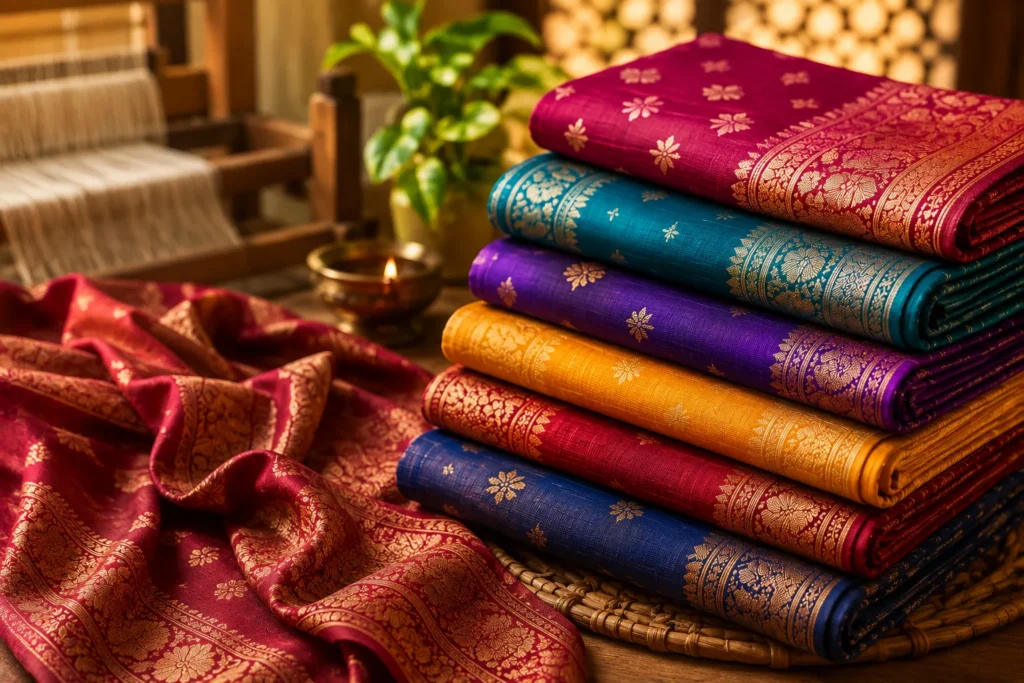
- For weddings and special occasions — Baluchari and Banarasi-style silk sarees, with their detailed motifs and zari borders, are built for the occasion and tend to be worn for years afterward, making the higher price easier to justify.
- If it’s your first handloom saree — start with cotton. It’s the most forgiving to drape, the easiest to care for, and gives you a genuine feel for handloom texture before you invest in silk.
Common Myths About Handloom Sarees
A few misconceptions keep first-time buyers away from handloom altogether — worth clearing up before you shop.
Myth 1: Handloom sarees are only for weddings
Not anymore. Lightweight Tant cotton and Tussar silk work just as well for office days and festive get-togethers as heavier silk does for a wedding — it’s really about matching the weave to the occasion, not saving handloom for one event a year.
Myth 2: They’re difficult to drape and hard to maintain
Cotton handloom in particular is genuinely easy to manage — it drapes easily, breathes well, and holds up to regular hand-washing. Even silk weaves mostly just need occasional dry cleaning and careful storage, not constant special treatment.
Myth 3: Every handloom saree is expensive
Simple Tant cotton starts around ₹1,500–2,000. What pushes the price up is the amount of handwork involved — a heavily worked Baluchari or zari-heavy Banarasi-style silk takes weeks to weave, and the price reflects that labour, not the “handloom” label by itself.
Myth 4: Small irregularities in the weave mean poor quality
It’s the opposite. Those slight variations — a border that’s not machine-perfect, subtle differences between one motif and the next — are proof a person wove the fabric by hand. Perfectly uniform patterns are usually the sign of a powerloom or printed piece, not a handloom one.
Top Handloom Sarees to Shop Online in 2026
Best for Everyday & Office Wear
Lightweight handloom cotton and hand-printed sarees are the easiest entry point — breathable, low-maintenance, and versatile enough for both home and office.
Shop handloom cotton and printed sarees →
Best for Festive Wear
Kantha stitch and Tussar silk sarees bring hand-embroidery and rich texture without bridal-level weight — ideal for Puja, family celebrations, and festive parties.
Kantha Stitch Tussar Silk Saree →
Best for a Regal, Statement Look
Bishnupuri silk sarees carry a distinctive sheen and woven motifs that work beautifully for semi-formal and festive occasions.
Best for Weddings & Special Occasions
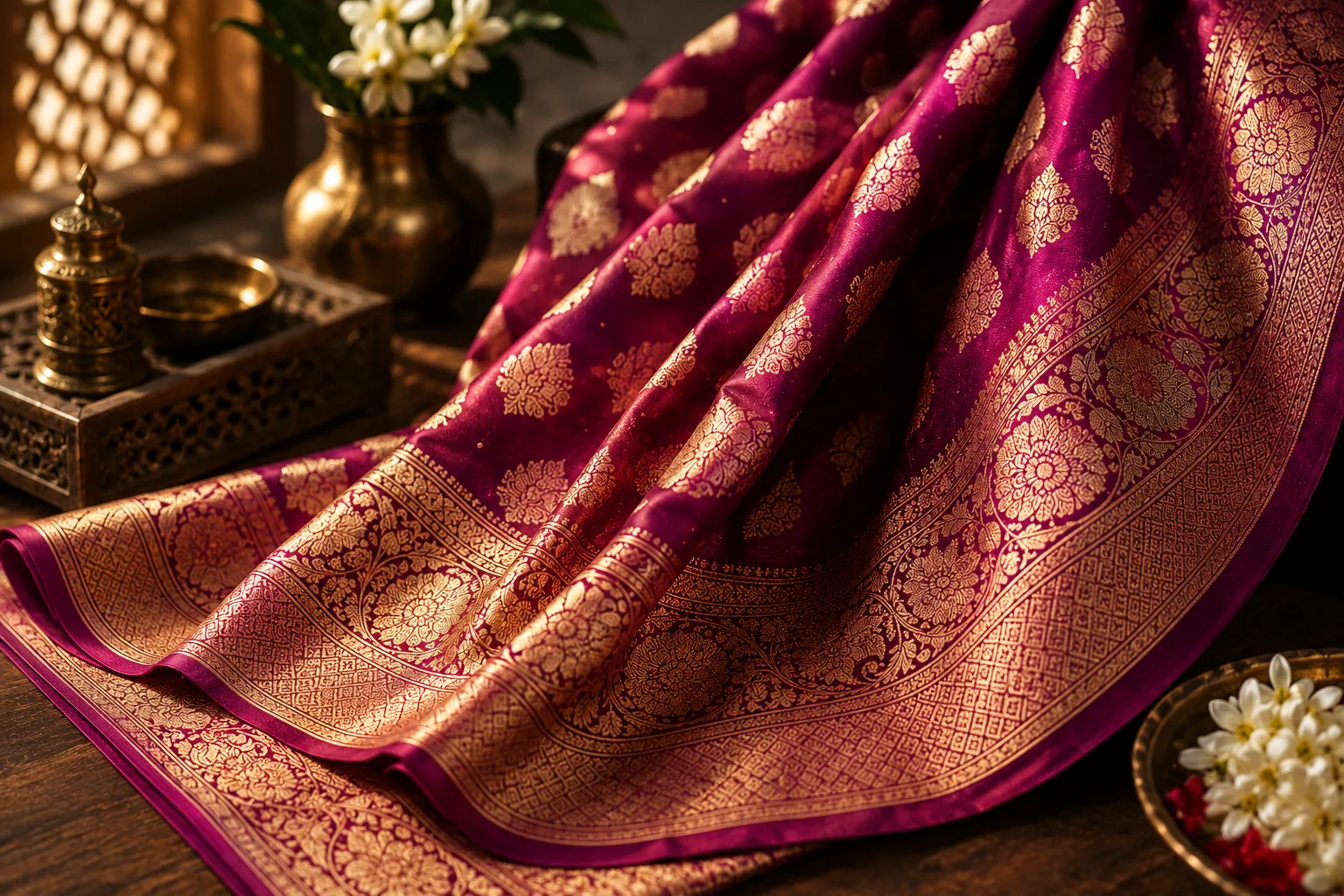
Baluchari sarees, with their storytelling motifs woven directly into the silk, and Banarasi-style silk sarees with detailed zari work, are the classic choices for weddings and milestone celebrations.
Best for a Modern, Artistic Edge
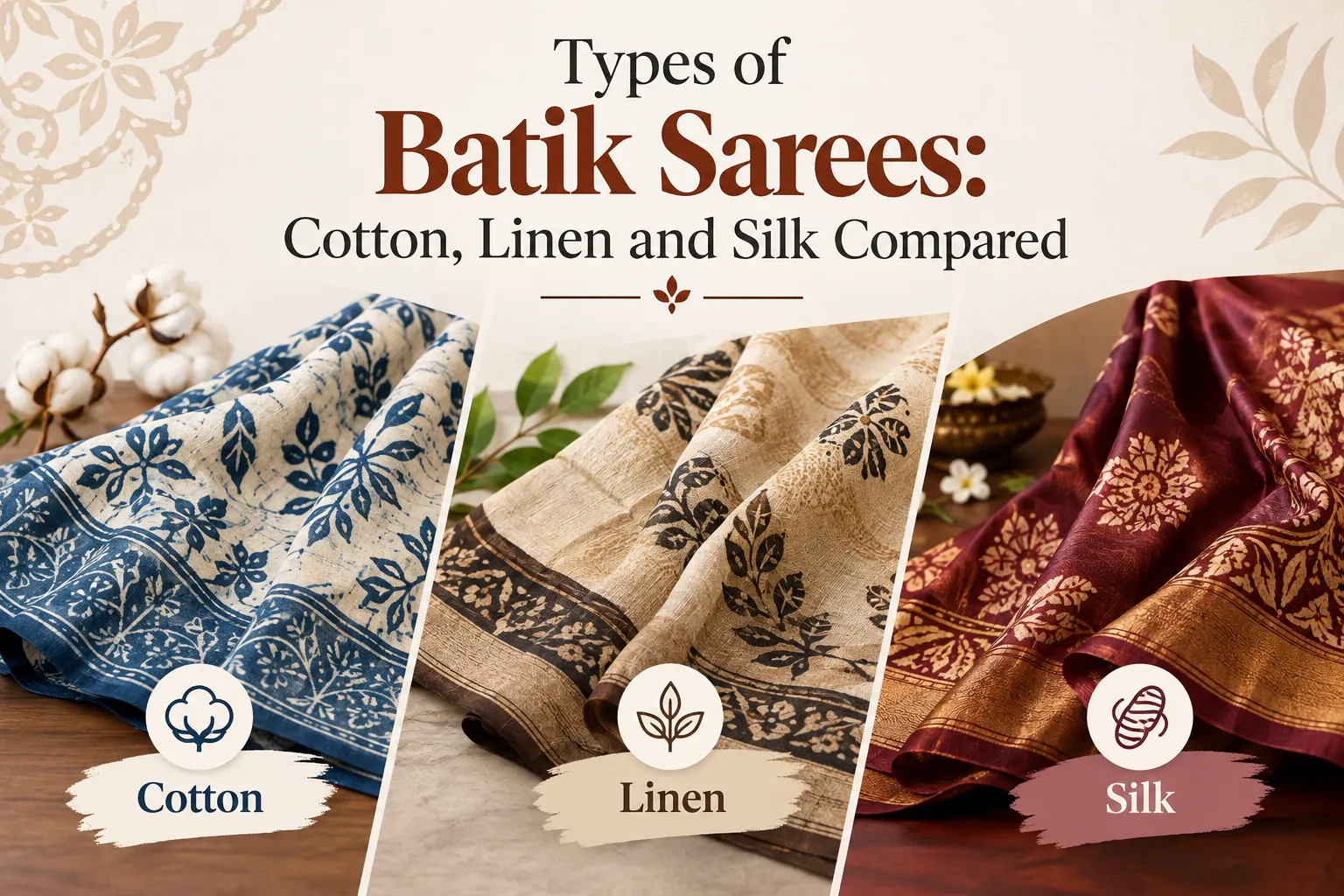
Batik-printed sarees combine handcraft techniques with contemporary motifs — a good option if you want something distinctive that isn’t traditional zari or silk.
Browse the full handloom saree collection to see current designs and availability:
Caring for Your Handloom Saree
- Dry clean silk handloom sarees, especially those with zari or heavy embroidery, to preserve colour and fabric integrity.
- Hand wash cotton handloom sarees in cold water with a mild detergent; avoid wringing.
- Store folded in a cotton or muslin cloth, away from direct sunlight and humidity, and refold periodically along different lines to prevent permanent creasing.
- Keep zari-work sarees away from perfume and deodorant contact, as they can tarnish the metallic thread over time.
Frequently Asked Questions
What is a handloom saree?
A handloom saree is woven entirely by hand on a manually operated loom, as opposed to a powerloom (machine-woven) or printed saree. It’s typically identifiable by small natural irregularities in the weave and, for many traditional weaves, a GI tag or Silk Mark certification.
How can I tell if a saree is genuinely handloom before buying online?
Check for a named weave and origin (e.g., Tant from Shantipur, Baluchari from Bishnupur), close-up photography showing weave texture, GI tag or Silk Mark mentions where applicable, and a price that’s realistic for the level of handwork involved.
Are handloom sarees expensive?
It depends on the weave. Simple handloom cotton sarees can start around ₹1,500–2,000, while intricate silk weaves like Baluchari or heavily worked Banarasi-style silk can run ₹10,000 and above, reflecting the weeks of skilled labour involved.
What’s the best handloom saree fabric for summer or daily wear?
Handloom cotton — particularly lightweight weaves like Tant — is the most breathable and comfortable option for hot weather and everyday wear.
How should I care for a handloom saree?
Dry clean silk and zari-work sarees; hand wash cotton handloom sarees in cold water. Store folded in breathable cloth away from sunlight and moisture.
Are Bengal handloom sarees GI tagged?
Several are — Garad saree, for instance, holds a registered Geographical Indication. GI tags help confirm regional authenticity, though not every genuine handloom weave carries one.
Is it safe to buy a handloom saree online?
Generally yes, as long as the seller can name the specific weave and weaving cluster, shows real close-up photography, and mentions GI tag or Silk Mark certification where it applies. Be cautious of listings that only use the word “handloom” as a generic label without any of that detail.
Why do prices for the same weave vary so much between sellers?
The biggest factors are silk purity (pure mulberry vs. blended), how much zari or hand-embroidery is involved, weave density, and how many layers sit between the weaver and the final seller. Buying closer to the weaver — as with a Bengal-sourced catalogue — tends to sit at the fairer end of that range.
What’s the difference between Tant, Jamdani, and Baluchari?
Tant is a plain handloom cotton weave from clusters like Shantipur, prized for being lightweight and everyday-wearable. Jamdani is a more intricate technique — often on fine cotton or muslin — where motifs are woven directly into the fabric by hand rather than added afterward. Baluchari, woven around Bishnupur, is a silk weave known specifically for storytelling motifs figured into the pallu, and sits at a higher price point because of the skill and time involved.
Ready to shop? Explore the full collection of handloom sarees at Loominators, sourced from weavers across Bengal.