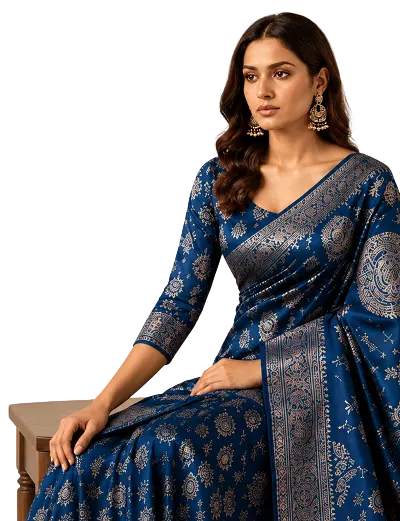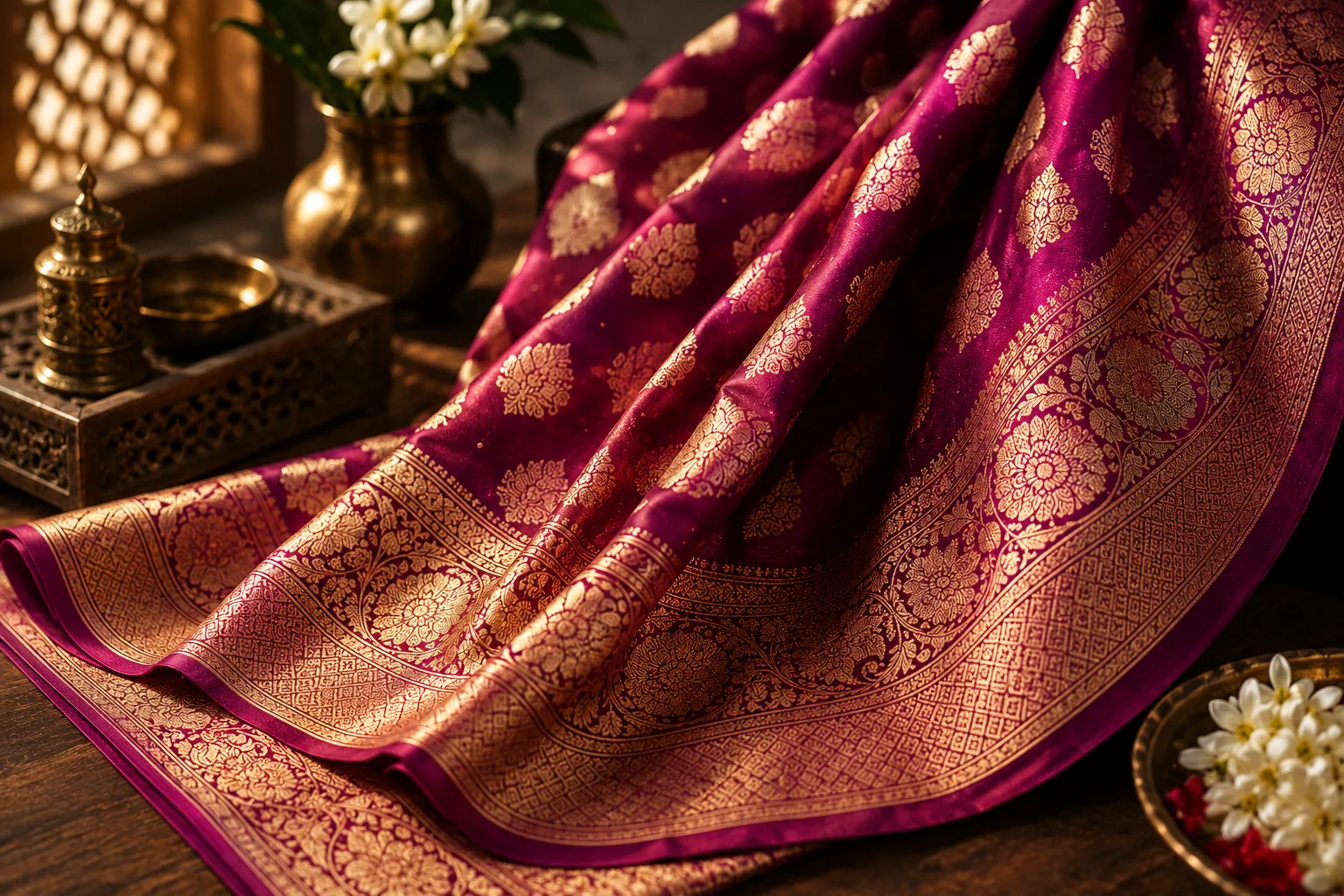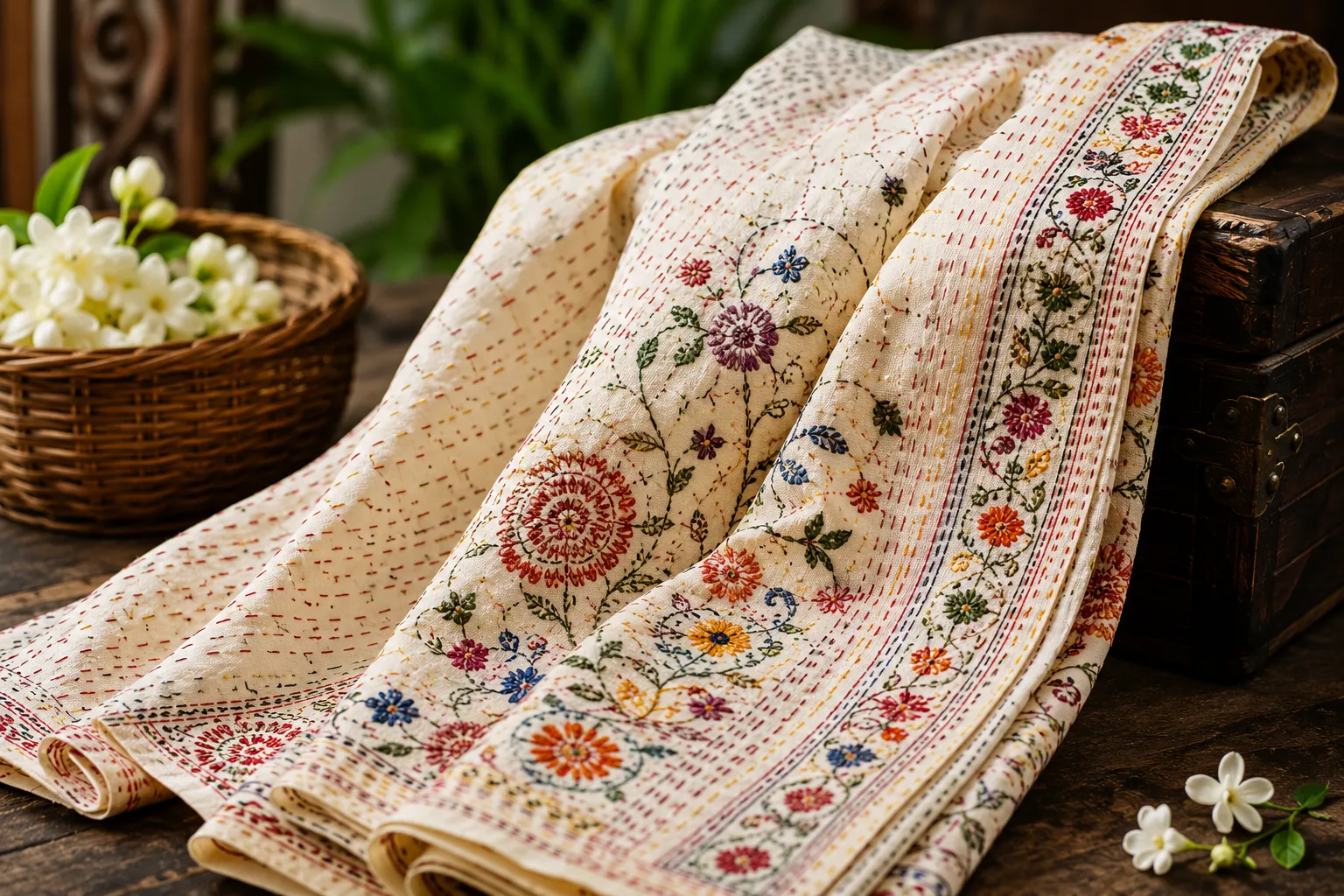

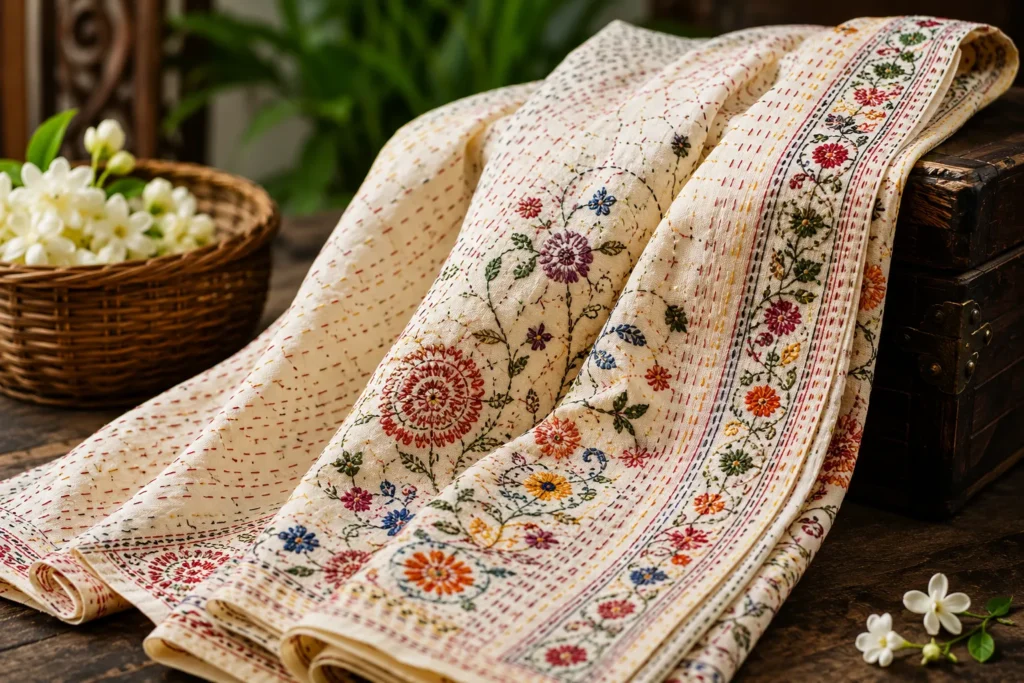
Loominators carries a range of Kantha stitch sarees online, each one hand-embroidered rather than woven-in the way Bishnupuri or Baluchari sarees are. The stitch itself is a simple running stitch, repeated over and over until it builds into a pattern. What looks understated up close reads as a full motif from a few feet away, patience turned into pattern.
What Is Kantha Stitch Embroidery?
Kantha comes out of rural Bengal, where women originally used the running stitch to quilt old, worn cloth into blankets and dhotis, practical mending that happened to look beautiful. Over time, the stitch moved onto sarees, and its more detailed, pictorial form came to be called nakshi kantha saree work, “nakshi” meaning pattern. A modern Kantha stitch saree is a direct descendant of that quilting tradition, refined for clothing instead of bedding.
How It’s Made
- Every motif is stitched by hand, thread by thread, no machine replicates the slight unevenness that makes it look handmade
- Common motifs: birds, fish, lotus, paisley, geometric borders, often in contrasting thread
- A saree can take anywhere from a few days to a few weeks, depending on how dense the embroidery is
Kantha on Different Fabrics
Kantha isn’t tied to one fabric- the stitch defines it, not the base cloth. Loominators stocks it across:
- Cotton Kantha- lighter, breathable, best for daily wear
- Kantha embroidery silk saree- heavier drape, more formal, holds the stitch detail beautifully
- Tussar silk Kantha- textured, slightly rough to the touch, popular for festive wear
Why Choose a Kantha Stitch Saree
Cotton versions are comfortable enough for a full workday. Silk versions hold their own at a wedding or puja. And because the embroidery is done by hand, you’re buying someone’s actual stitching time, not something off a production line.
When to Wear One
Casual outings and office wear (cotton), festive days and family functions (silk or Tussar), cultural events where the craft itself is the point. It’s less common as reception wear — that’s usually Baluchari or Kanjivaram territory.
Styling Guidence
Let the embroidery do the talking. A plain-colored blouse works better than a patterned one. Jewelry tends toward silver or terracotta rather than heavy gold, matching the handmade feel instead of competing with it.
What Affects the Price
Three things drive the cost: the base fabric (cotton is the most affordable, silk the most expensive), how dense the stitching is, and how much of the saree is covered, border-only work costs less than an all-over motif. A kantha work saree Bengal artisans finish over several weeks will naturally cost more than a simpler, faster piece.
Care Instructions
Hand-wash in cold water, turned inside out so the embroidery doesn’t snag on anything. Iron from the reverse side on a low setting so the stitches don’t flatten. Skip the dryer entirely.
Why Shop with Loominators
- Sourced directly from embroiderers around Bengal, no middlemen involved
- Every saree checked for stitch quality and fabric before it’s listed
- New Kantha designs added regularly across cotton, Tussar, and silk
- Real help with sizing, styling, or fabric questions if you need it
Frequently Asked Questions
What’s the difference between Kantha and Nakshi Kantha? Nakshi Kantha refers to the more detailed, pictorial version of Kantha embroidery, birds, motifs, sometimes whole scenes, rather than simple border work.
Is a Kantha stitch saree suitable for daily wear? Cotton Kantha, yes. Silk versions are usually saved for festive or special occasions.
How do I buy a Kantha stitch saree online from Loominators? Browse by fabric — cotton, Tussar silk, or silk — and filter by price. We ship pan-India.
Does Kantha embroidery fade or wear out? Not with proper care. Hand-wash, avoid harsh detergent, and it holds up for years.