
Womens corporate wear in India falls into four dress codes: business formal, business casual, smart casual and ethnic Friday. Get those four straight and the shopping becomes simple. Two well-cut trousers, three solid tops or kurtas, one jacket and one muted saree will cover nearly every working day in most Indian offices.
That’s the short version. The longer one is below, because “corporate” means something very different in a nationalised bank in Dalhousie than it does in a Sector V software park.
There are more of us figuring this out every year. According to the PLFS Annual Report 2025 from MoSPI, about 20 crore women were employed in India in 2025, and the share of working women in regular salaried jobs rose from 16.6% to 18.2% in a single year. That second number matters here. Salaried jobs come with dress codes.
Women’s corporate wear by dress code: a quick decoder
Most HR policies use the same four labels, even when they don’t define them. Here’s what each one means on the ground.
| Dress code | Where you’ll see it | What works | What to skip |
|---|---|---|---|
| Business formal | Banks, law firms, Big Four audits, client pitches, board meetings | Tailored trousers with a blazer, solid saree with a structured blouse, straight kurta with a jacket | Prints louder than a pinstripe, sleeveless without a layer, chunky jewellery |
| Business casual | IT services, MNC back offices, most corporate floors Monday to Thursday | Kurta with straight pants, shirt with ankle trousers, a muted co-ord set | Denim, crop tops, very sheer fabrics |
| Smart casual | Startups, agencies, media, design studios | Printed co-ords, short kurtis over cigarette pants, a light jacket over a dress | Gym wear, worn-out sneakers, slogan tees |
| Ethnic Friday / festive day | Most offices on Fridays, before Puja and Diwali | Cotton or cotton-silk saree, 3-piece kurti set, dhoti pants with a short kurti | Heavy bridal work, anything you’d wear to a sangeet |
If your office never told you which one it follows, look at what senior women wear on a Tuesday. Not on the day of a town hall. A Tuesday.
What different industries actually expect
Banking and PSUs are still the most conservative. Sarees and salwar suits are completely normal there, often more normal than a blazer. Keep colours deep (navy, maroon, bottle green, grey) and borders narrow.
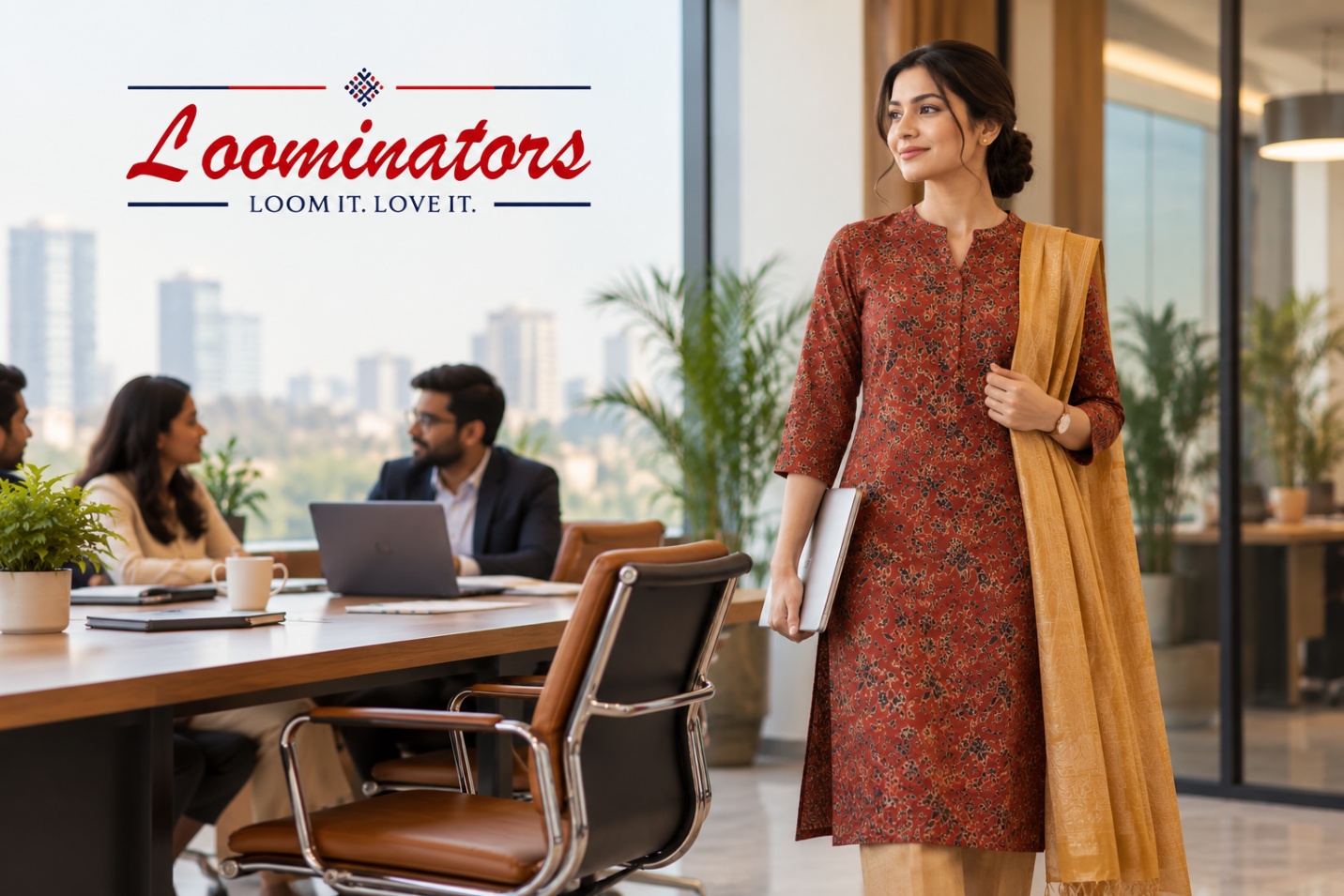
IT services and large MNCs sit firmly in business casual. A kurta with straight trousers is the unofficial uniform, and nobody will look twice. Client-facing days are when you bring out the jacket.
Consulting, legal and audit teams lean western-formal for client meetings but relax internally. One good blazer that fits your shoulders does more work here than five new tops.
Startups and agencies care more about looking put-together than looking formal. This is where a printed co-ord or a bold kurti earns its place.
The fabric problem that shows up every July
Here’s a mistake we see all the time. Someone buys a sharp polyester-crepe trouser suit in February, wears it twice and then can’t bear it from April to September. Kolkata, Chennai and Mumbai offices are humid outside and freezing inside, so your clothes have to handle both in the same hour.
What works in practice:
- Cotton and cotton blends for daily kurtas and tops. They breathe on the commute and don’t cling under AC.
- Linen blends for trousers. Pure linen creases by 11 am, but a 30 to 40% linen blend holds a line much better.
- Cotton-silk, chanderi and Bishnupuri silk for formal days when you want a little sheen without heat.
- Rayon and viscose for drape, but check the weight. Thin rayon turns see-through under office tube lights.
Carry a light layer. A cotton jacket or a stole solves the AC problem without making you look like you’re dressed for Darjeeling.
11 corporate looks that work in Indian offices
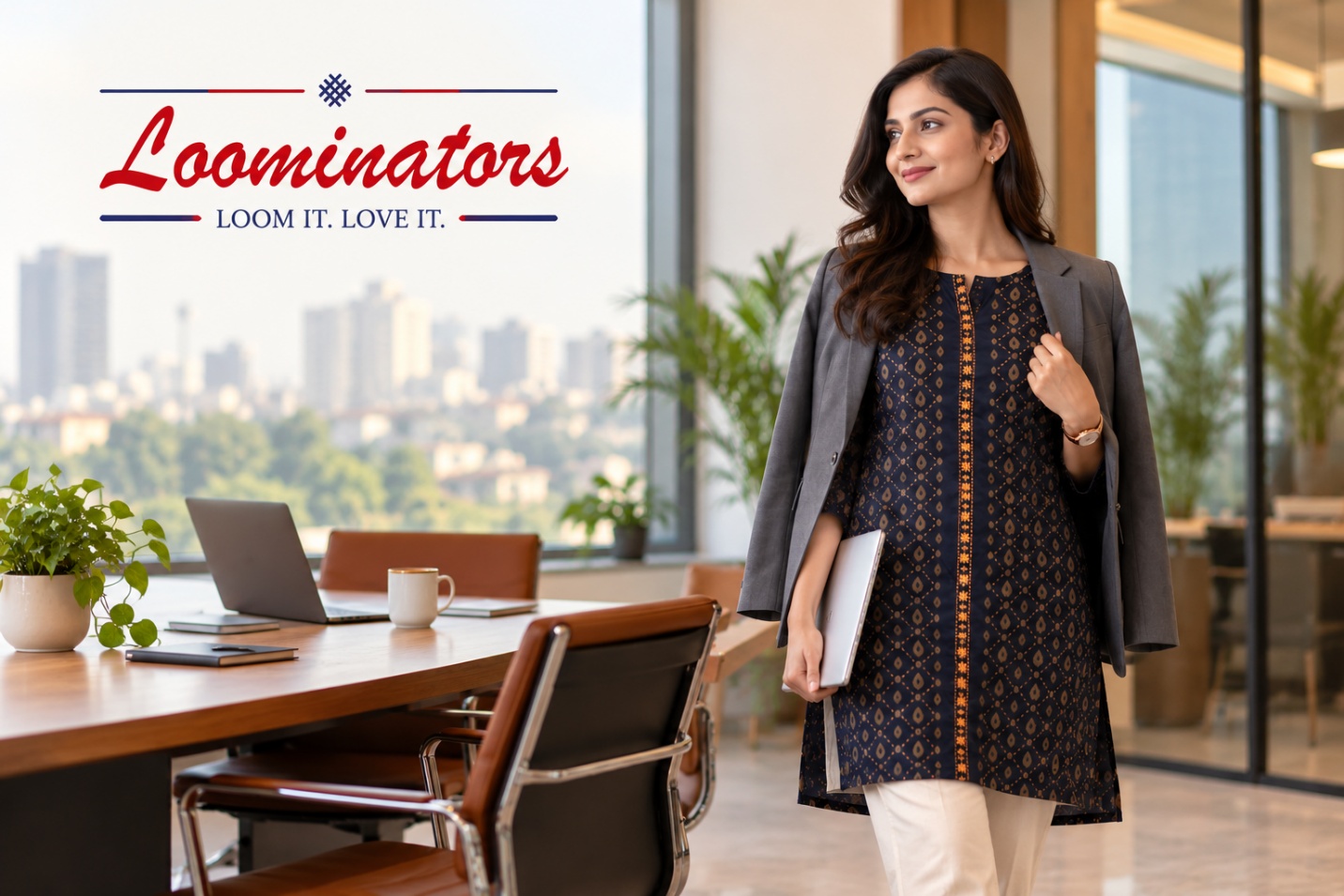
- Navy straight kurta, white cigarette pants, tan loafers. The safest business-casual outfit there is. A plain cotton kurti in navy, black or olive does this job for well under ₹1,000.
- Grey tailored trousers with an ivory shirt and a charcoal blazer. Your client-pitch outfit.
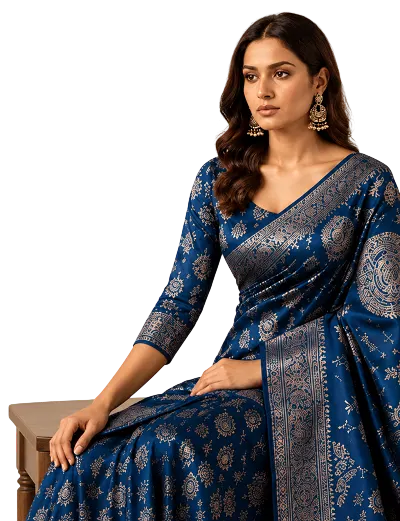
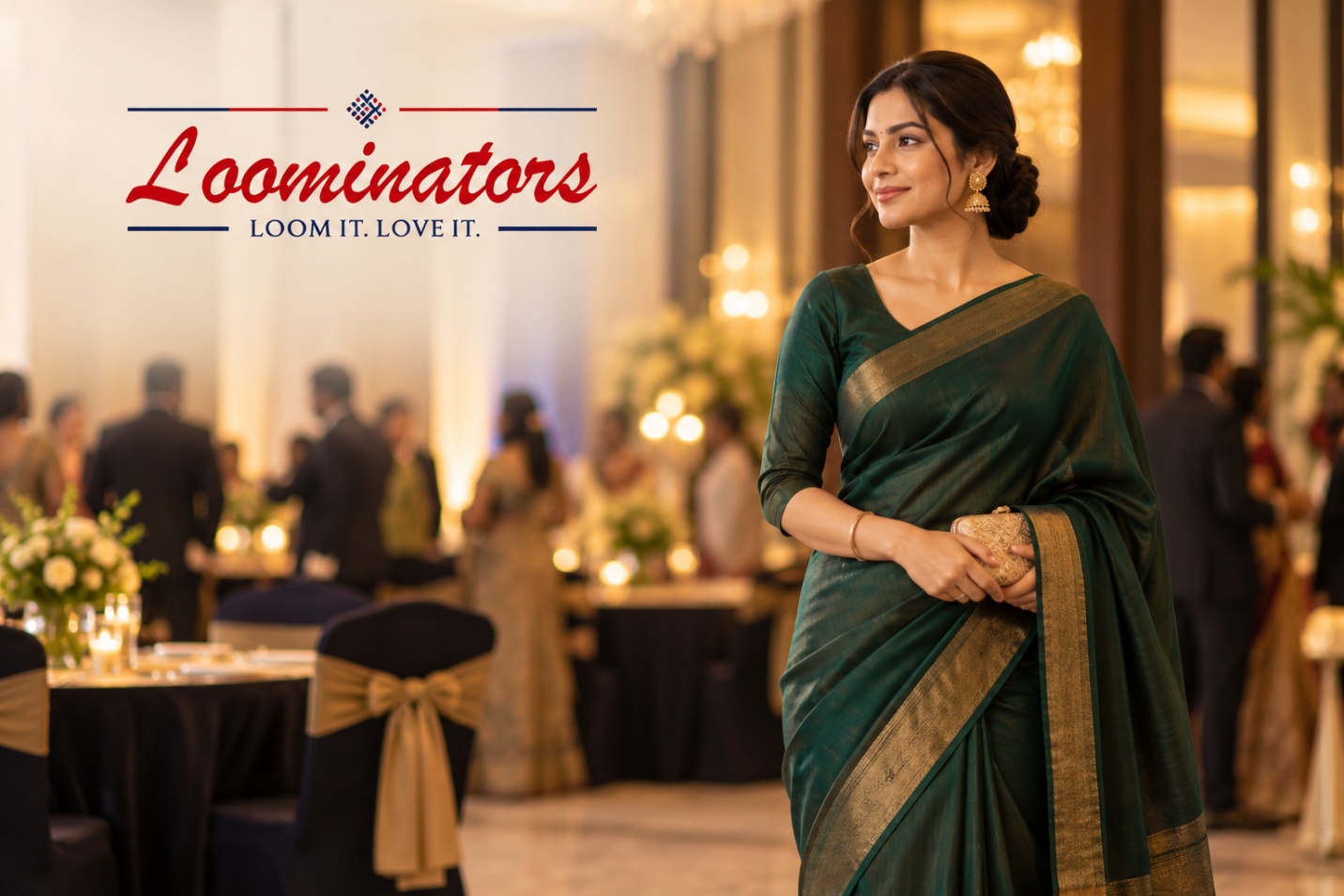
- A solid cotton-silk saree with a three-quarter-sleeve blouse. Pleats pinned neatly, one pair of studs, a watch. Nothing reads more senior in an Indian boardroom.
- A muted pant-and-top set. Well-cut co ord sets for women in beige, sage or dusty blue look polished with zero styling effort, which is exactly what you want at 8 am.
- Short printed kurti over black ankle trousers, for smart-casual floors.
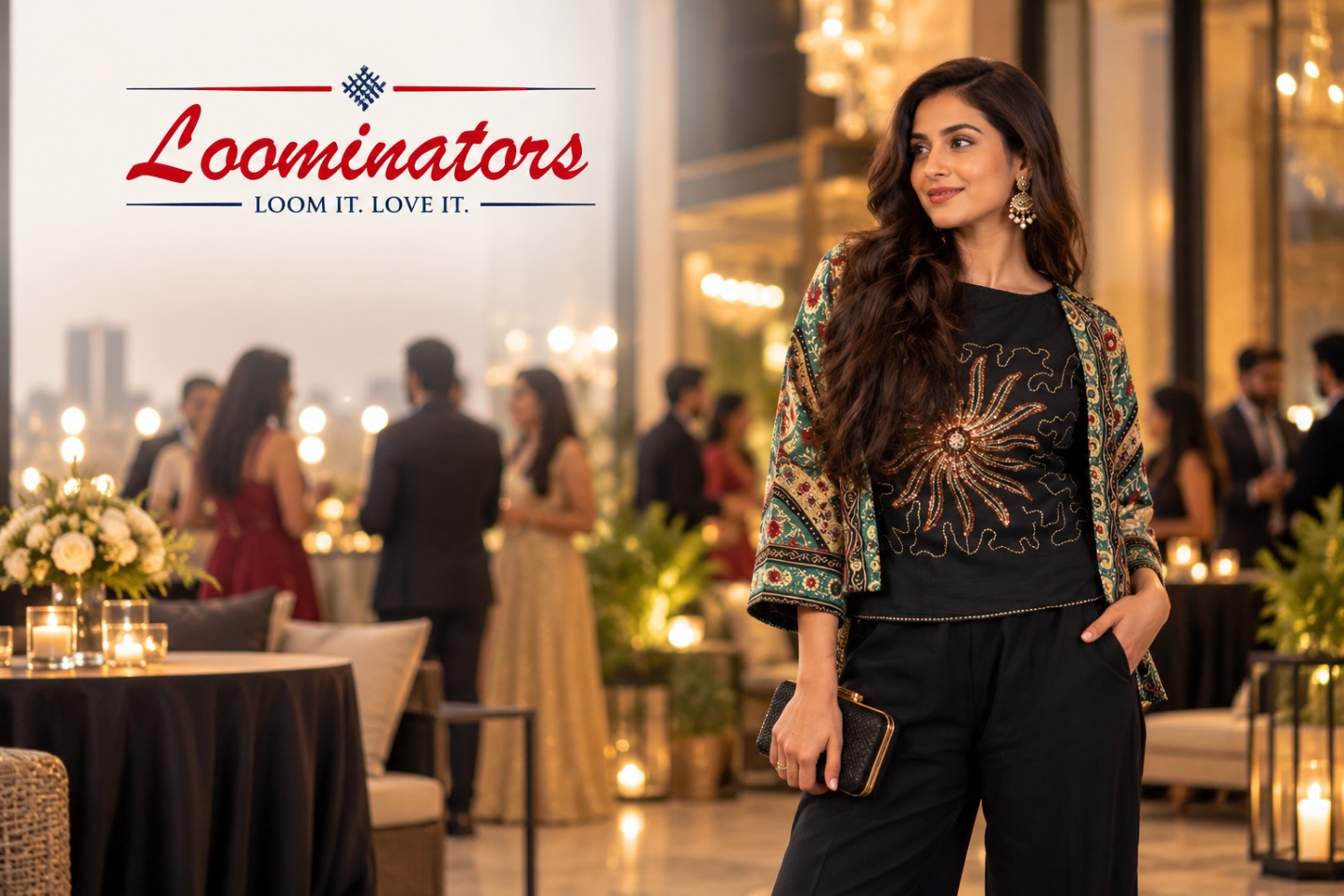
- A sleeveless straight kurta with a cotton jacket on top. Take the jacket off at lunch, put it back on for the 4 pm call. The jackets for women section has lightweight options built for this.
- Shirt dress, belted, midi length, with block heels.
- A 3 piece kurti set in a dark solid for presentation days when you’d rather wear Indian than a blazer.
- A classic salwar suit with a neatly pinned dupatta. Still the most comfortable formal option for long field days.
- Wide-leg trousers with a tucked-in knit top and a long cardigan, for winter in north Indian offices.
- A handwoven saree for ethnic Friday. Bengal loom sarees in cotton are light enough for a full working day, and a bishnupuri silk saree is the pick when Friday also happens to be an annual-day function.
Fit checks before you click “buy”
Corporate clothes are judged on fit far more than on price. A ₹600 kurta that fits will beat a ₹4,000 one that pulls across the bust.
Check four things on the size chart and again when the parcel arrives. Shoulder seams should sit on your shoulder bone, not past it. Kurta side slits should start at or just above the hip, so you can sit without the hem riding up. Trouser rise should be mid or high, since low rise and office chairs don’t get along. And hold the fabric up to a window. If you can see your fingers through it, it needs a lining or it isn’t office wear.
When in doubt between two sizes, go with the larger one for kurtas and the smaller one for trousers. Kurtas are easy to take in at the side seams. Trousers that are too big look borrowed.
A 10-piece corporate capsule and what it costs
You don’t need a new wardrobe. You need the right ten pieces. These are typical price ranges for mid-range Indian brands in 2026.
| Piece | How many | Typical price range |
|---|---|---|
| Solid or micro-print cotton kurtas | 3 | ₹500 to ₹1,500 each |
| Straight or cigarette trousers (black, navy) | 2 | ₹700 to ₹1,800 each |
| Co-ord set in a neutral shade | 1 | ₹1,200 to ₹2,500 |
| Light jacket or blazer | 1 | ₹1,200 to ₹3,500 |
| Cotton or cotton-silk saree | 1 | ₹1,500 to ₹5,000 |
| Shirt or shirt dress | 1 | ₹800 to ₹2,000 |
| Statement saree for formal events | 1 | ₹5,000 and up |
Mixed and matched, those ten pieces give you more than 20 distinct outfits. Most women we speak to already own half of them.
Where to start this week
If you’re building from scratch, buy in this order: trousers first, then solid kurtas, then one jacket. Those three categories carry the most outfits per rupee. Add the co-ord and the saree once the basics are sorted.
If your office leans Indian most days, our 15-outfit plan for indian office wear for ladies shows how to rotate kurtas, co-ords and sarees across the week. For interviews and client pitches in ethnic wear, the rules in professional indian formal wear for ladies for office cover what to change.
At Loominators we keep the corporate edit practical: cotton kurtis that survive a Kolkata monsoon commute, co-ord sets that don’t need ironing skill, and handwoven sarees for the days that call for one. Prepaid orders ship free, COD is available, and you get 7 days to return anything that doesn’t fit right. Not sure about a size? Message us on WhatsApp at +91 98300 54954 with your bust and hip measurements and we’ll tell you which one to pick.
Frequently Asked Questions
What is considered corporate wear for women in India?
Any outfit that fits your office dress code: tailored trousers with a shirt or blazer, a straight kurta with pants, a salwar suit, or a solid saree. Indian wear counts as fully formal in almost every Indian workplace.
Can I wear a kurti to a corporate office?
Yes. A solid or small-print straight kurti with trousers is standard business casual in IT, banking and most MNC floors. Skip heavy embroidery and very short lengths for client days.
Is a saree too traditional for a corporate job?
No. In banks, PSUs and senior roles a well-draped cotton-silk or handloom saree often reads as more formal than a blazer. Keep the border narrow and the jewellery minimal.
What colours look most professional at work?
Navy, black, charcoal, maroon, olive and ivory. Use pastels and prints on business-casual days.
How many outfits do I need for a 5-day office week?
Ten well-chosen pieces give you 20-plus combinations. Start with two trousers, three kurtas or tops, one jacket, one co-ord and one saree, then add slowly.
Which fabric is best for corporate wear in humid cities like Kolkata?
Cotton, cotton blends and linen blends for daily wear, with cotton-silk for formal days. Avoid heavy polyester from April to September; it traps heat on the commute and clings under AC.