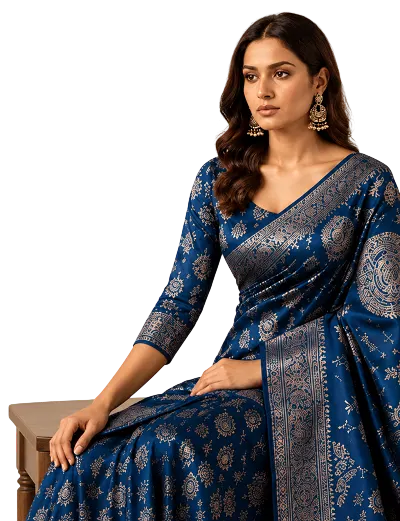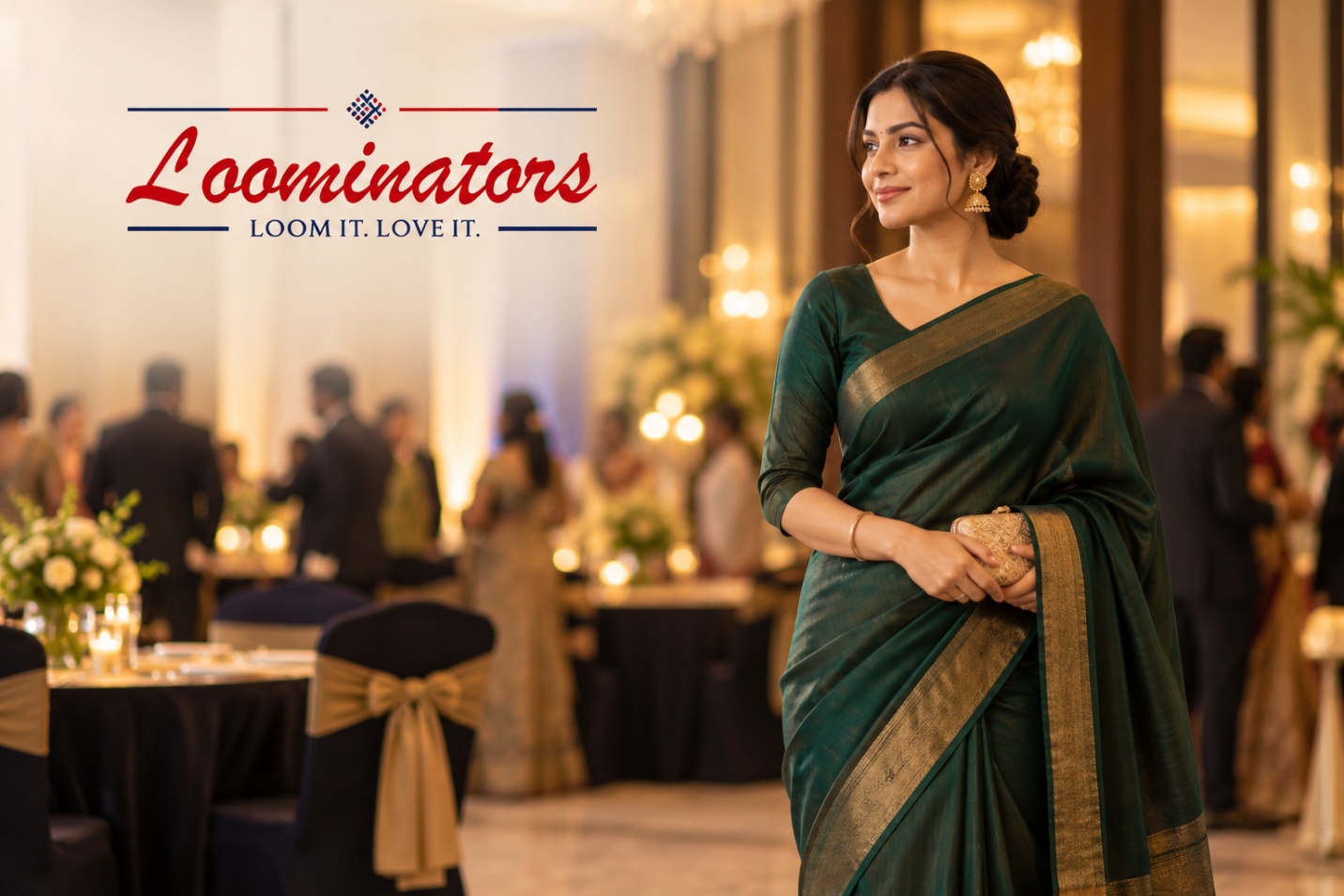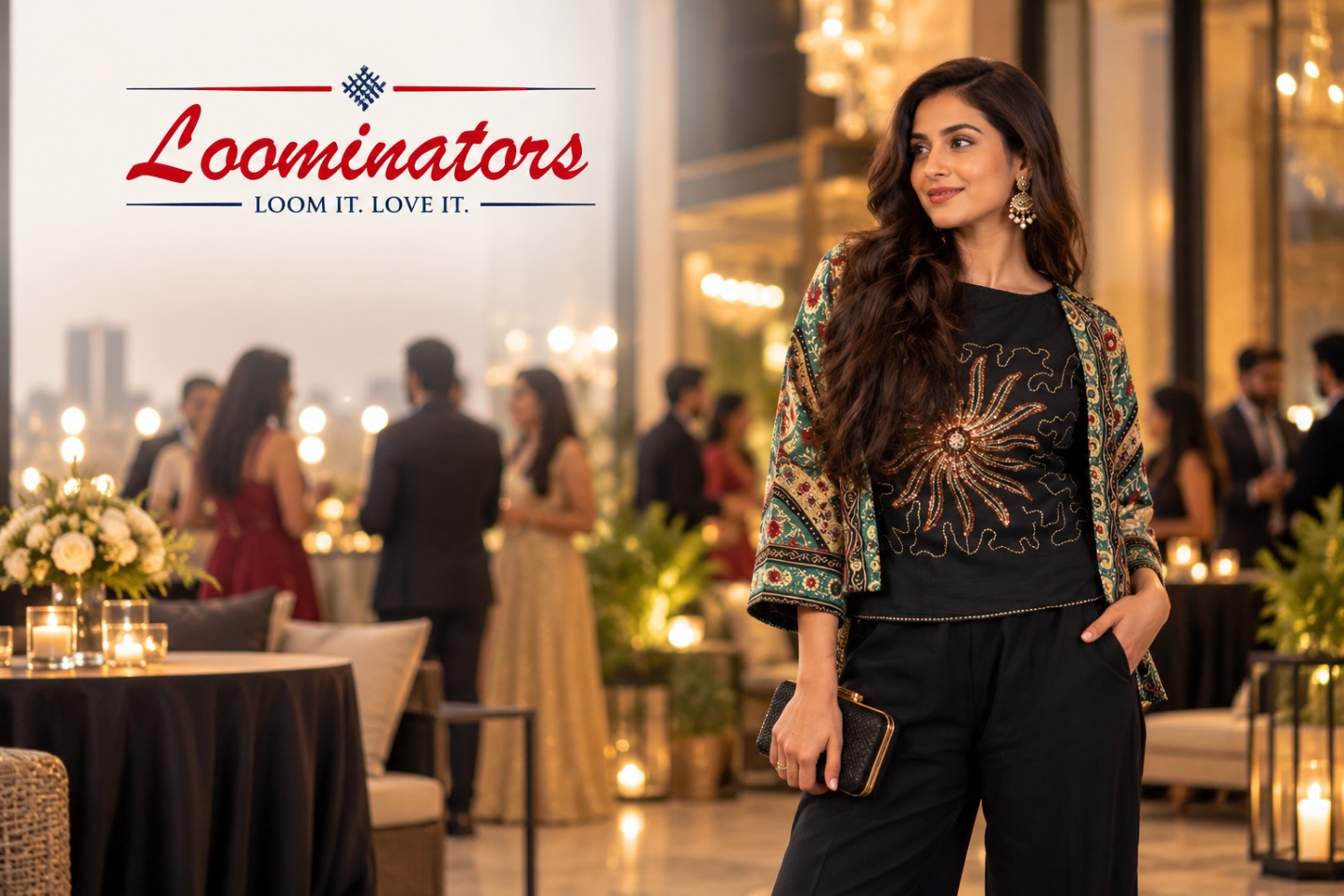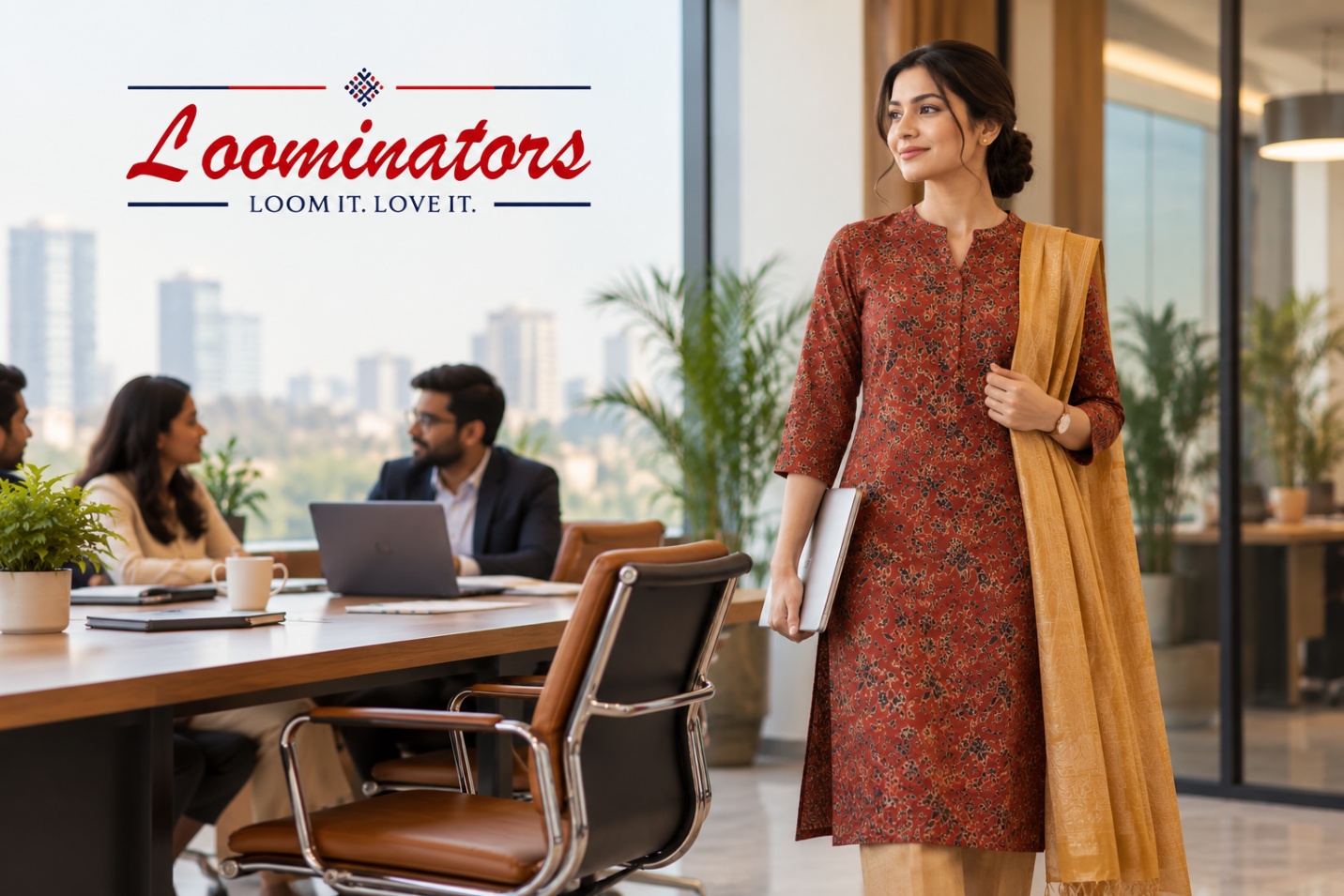

Indian formal wear for ladies means outfits that look dignified and composed rather than celebratory: a handloom or silk saree, a well-cut salwar suit, a coordinated kurta set, or an Indo-western jacket set in rich but quiet colours. It sits between office wear and wedding wear. Polished enough for an award night or an embassy dinner, restrained enough that nobody mistakes you for the bride’s sister.
That middle ground is where most women get stuck. Festive wear is easy to find. Office wear is easy to find. The outfit for your company’s annual awards, a government function or your daughter’s convocation is harder, because it has to do both jobs at once.
Formal vs festive: where’s the line?
The same saree can be either. What changes is the styling. Three signals push an outfit from formal into festive: shine, sparkle and volume.
Formal Indian wear keeps one of those, at most. A Banarasi saree already has shine, so you skip the heavy necklace. A sharara already has volume, so you choose a matte fabric. A plain cotton-silk saree has none, so a statement pair of jhumkas is fine.
Festive wear stacks all three. That’s the whole difference, and it’s why a Kanjivaram can look boardroom-grand on one woman and wedding-ready on another.
The formality ladder for Indian formal wear for ladies
Use this to match an outfit to the invite. Level 1 is the least formal, level 5 the most.
| Level | Outfit | Best for |
|---|---|---|
| 1 | Cotton kurta set with straight pants | Workshops, college events, daytime seminars |
| 2 | Salwar suit or 3-piece kurta set in a solid colour | Conferences, government offices, parent-teacher meetings |
| 3 | Handloom cotton or cotton-silk saree | Formal lunches, panel talks, convocations, official functions |
| 4 | Silk saree (Bishnupuri, Tussar, Chanderi) or a sharara set | Award ceremonies, formal dinners, embassy or club events |
| 5 | Heavy silk (Baluchari, Kanjivaram, Banarasi) with restrained jewellery | Black-tie equivalents, state functions, milestone receptions |
When the invitation says “formal” and nothing else, aim for level 3 in daylight and level 4 after dark.
10 Indian formal outfits every woman should know
1. The handloom cotton saree
The workhorse. Light, breathable and quietly elegant. Bengal’s tant and handwoven loom sarees are ideal for daytime formal events because they hold crisp pleats in humid weather. Starch lightly; over-starched cotton crackles when you sit.
2. The Bishnupuri silk saree
Softer and lighter than most silks, with a matte sheen that photographs beautifully under stage lights. A bishnupuri silk saree is our first suggestion for women who want silk at a formal dinner but find Banarasi too heavy for a four-hour event.
3. The Baluchari
Narrative figures woven into the pallu make it a conversation piece. Wear a Baluchari silk saree to a level-5 occasion and keep everything else almost bare: small studs, a slim bangle, hair in a low bun.
4. The batik or block-print silk saree
For creative-industry events, art openings and literary festivals, where formal still allows personality. Our guide to the types of batik sarees explains how cotton, linen and silk batik differ in drape.
5. The solid salwar suit
Straight kameez, churidar or straight pants, chiffon or cotton-silk dupatta. A salwar suit in bottle green, wine or ink blue goes from a morning conference to an evening reception with only a change of earrings.
6. The 3-piece kurta set
Kurta, bottom and dupatta in one coordinated colour story. A georgette 3 piece kurti set in black is the closest thing Indian wear has to a little black dress.
7. The sharara set
Wide, fluid and undeniably dressy. A sharara suit set works for formal evenings if the fabric is matte and the embroidery stays at the neckline. Skip it for daytime events; it reads as wedding-adjacent before sunset.
8. The ethnic gown
A floor-length Indian gown gives you saree-level formality with zero draping. Our long gown for women styles suit cocktail-hour invites and award nights.
9. Dhoti pants with a structured kurta
The most modern option here. Dhoti pants with a hip-length kurta and a stiff jacket look sharp at a design conference or a launch party.
10. The Indo-western jacket set
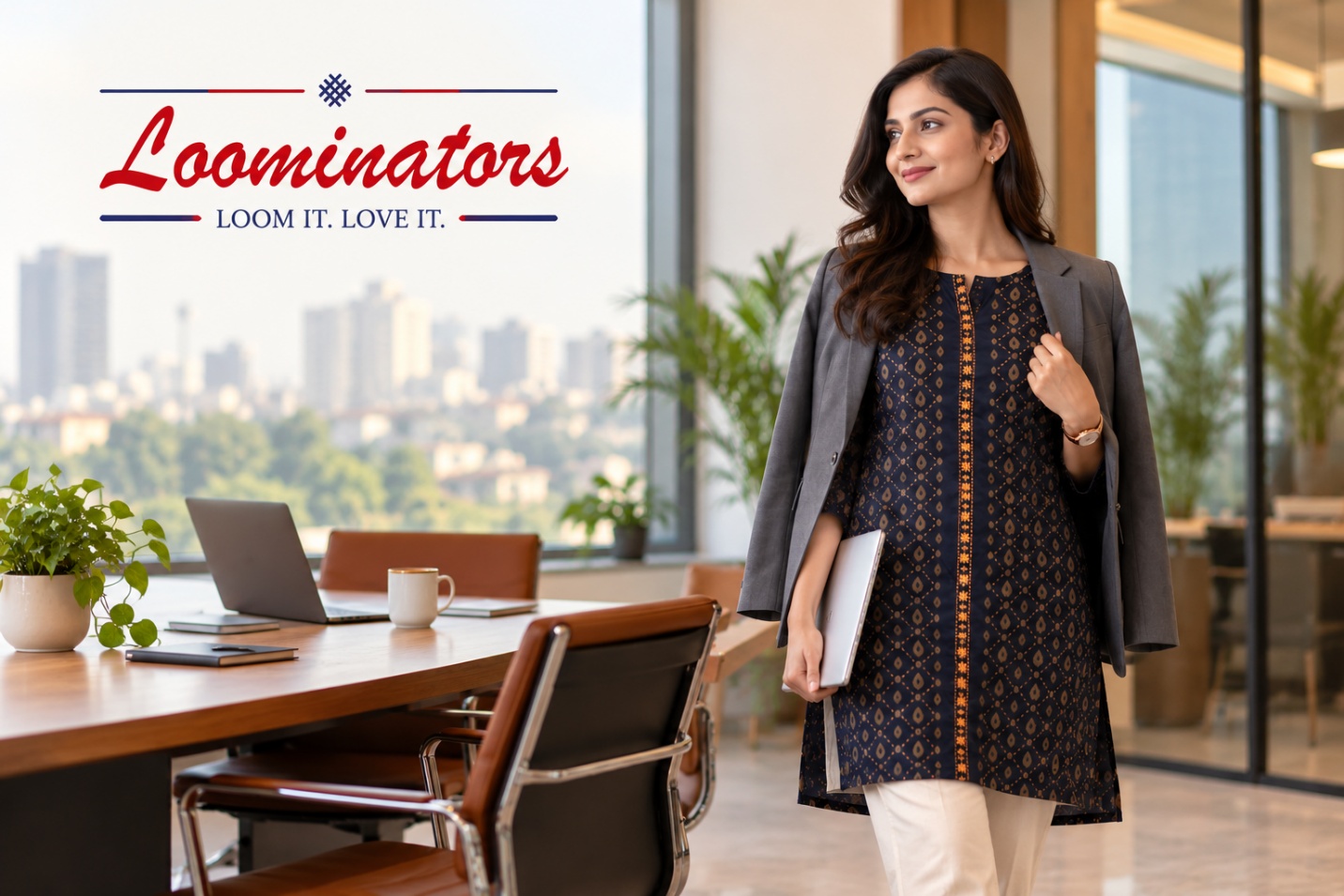
A long jacket over a slim kurta and trousers. It nods to a bandhgala, carries the authority of a blazer, and works anywhere western formal is the default but you’d rather not wear one.
Day vs evening
Daylight is unkind to shine. Zari and satin that glow under chandeliers look flat or brassy at noon. For daytime formal events lean on texture: handloom weaves, matte silks, chanderi. Keep colours soft or earthy, like ivory with a red border, mustard, sage or rust.
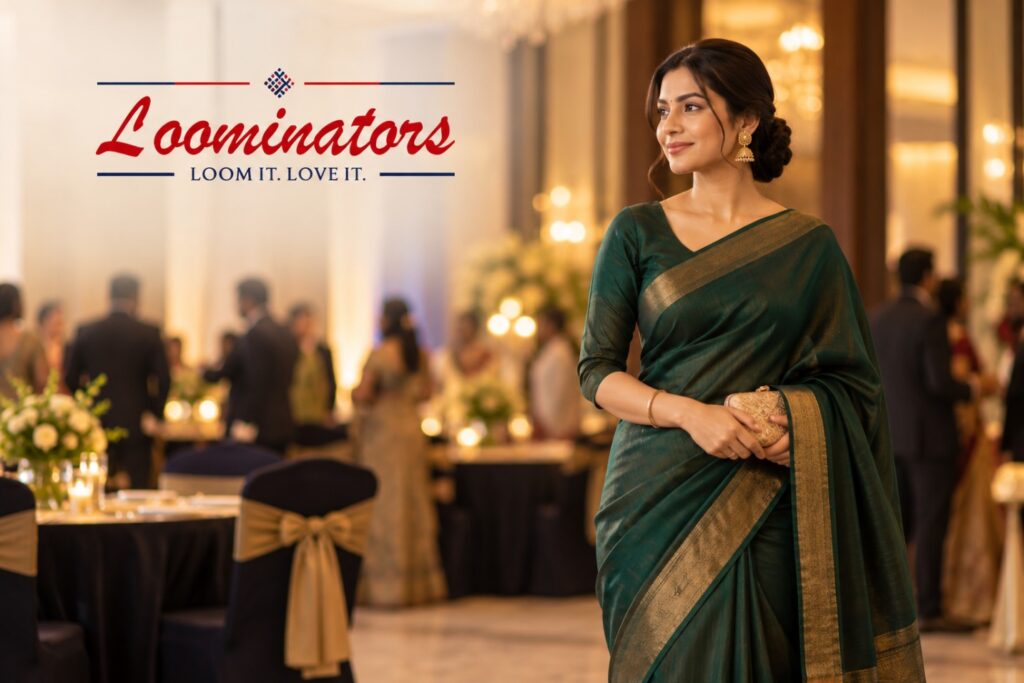
After dark, deeper colours and a little shine come alive. Wine, emerald, navy and black all work. This is when a silk saree or a sharara earns its place. If you’re comparing evening saree options, our list of different types of saree for reception covers twelve that hold up well under artificial light.
Regional handlooms that count as formal anywhere
One of the nicest things about Indian formal wear is that a regional weave reads as formal across the country. A Kanjivaram is formal in Kolkata. A Baluchari is formal in Chennai. Wearing a handloom from your home state to a national-level event is a quiet signal of taste.
A few that work almost everywhere: Bishnupuri and Baluchari from Bengal, Chanderi and Maheshwari from Madhya Pradesh, Kanjivaram from Tamil Nadu, Pochampally ikat from Telangana, and Muga or Mekhela chador from Assam.
Jewellery, footwear and finishing
Pick one focal point. Earrings or a necklace, not both. A watch counts as jewellery at formal events, so leave the smartwatch at home if you can.
Footwear should be closed or semi-closed for daytime and can turn embellished at night. Block heels beat stilettos on carpeted halls and lawn venues.
Press or steam everything the day before. Pin saree pleats at the waist and the pallu at the shoulder. A formal look falls apart fastest when the drape slips.
Picking yours
If you own only one Indian formal outfit, make it a mid-weight silk saree in a deep jewel tone. It covers levels 3 to 5 depending on how you style it. Add a solid salwar suit for daytime, and you’re covered for nearly every formal invite of the year.
Working-day formal is a different brief; for that, see our guide to professional indian formal wear for ladies for office.
Loominators carries handwoven Bengal sarees, sharara sets, gowns and kurta sets, with free shipping on prepaid orders, COD and 7-day returns. If you have an event coming up and can’t decide between two pieces, WhatsApp us at +91 98300 54954 with the occasion and the time of day, and we’ll tell you which one we’d pick.
Frequently Asked Questions
What is Indian formal wear for ladies?
Outfits like handloom or silk sarees, solid salwar suits, coordinated kurta sets, sharara sets and Indo-western jacket sets, styled with restraint. They’re dressier than office wear and calmer than wedding wear.
Is a saree formal or festive?
Both, depending on styling. A saree with minimal jewellery and a matte or handloom finish is formal. Add heavy zari, sequins and layered jewellery and it turns festive.
What Indian outfit should I wear to a formal dinner?
A silk saree in a deep colour, or a matte sharara set with embroidery only at the neckline. Keep jewellery to one statement piece.
Can I wear a kurti to a formal event?
A plain kurti alone is usually too casual. Upgrade to a 3-piece kurta set with a matching dupatta, or layer a structured jacket over a straight kurta.
Which colours look most formal in Indian wear?
Deep jewel tones (wine, emerald, navy, plum) for evenings, and ivory, rust, mustard or sage for daytime. Black works at almost any formal event in metropolitan India.
Is a lehenga considered formal wear?
Not really. A lehenga is festive or bridal wear in most settings. For a formal event that needs volume, a sharara or an ethnic gown is the better call.