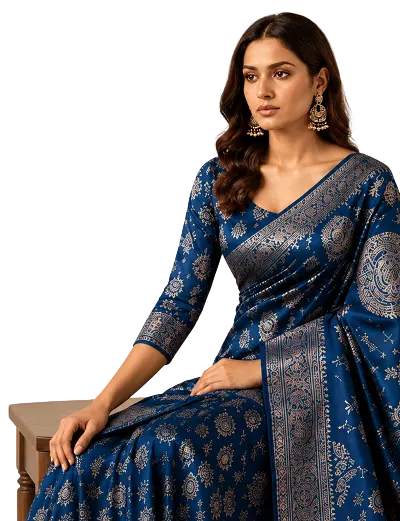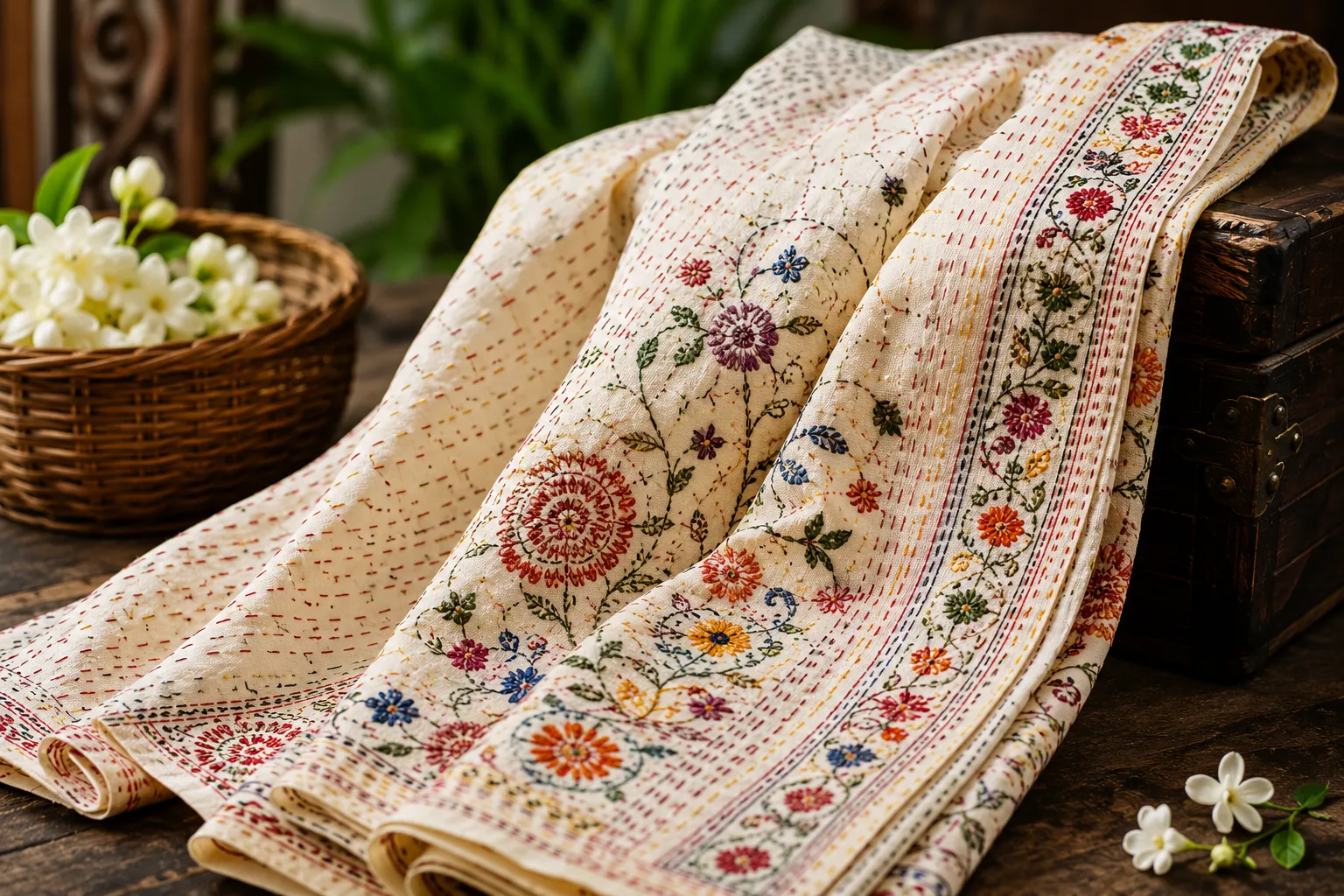

A Batik saree isn’t just a printed saree. What sets it apart is the process: wax applied by hand, dye soaked in, and the wax cracked or scraped away to reveal the pattern underneath. That’s what gives Batik its signature crackle lines and layered colour, an effect no ordinary print machine fully replicates.
Once you’ve picked a design you like, there’s a second decision most buyers skip: the fabric. And it changes everything about how the saree actually wears.
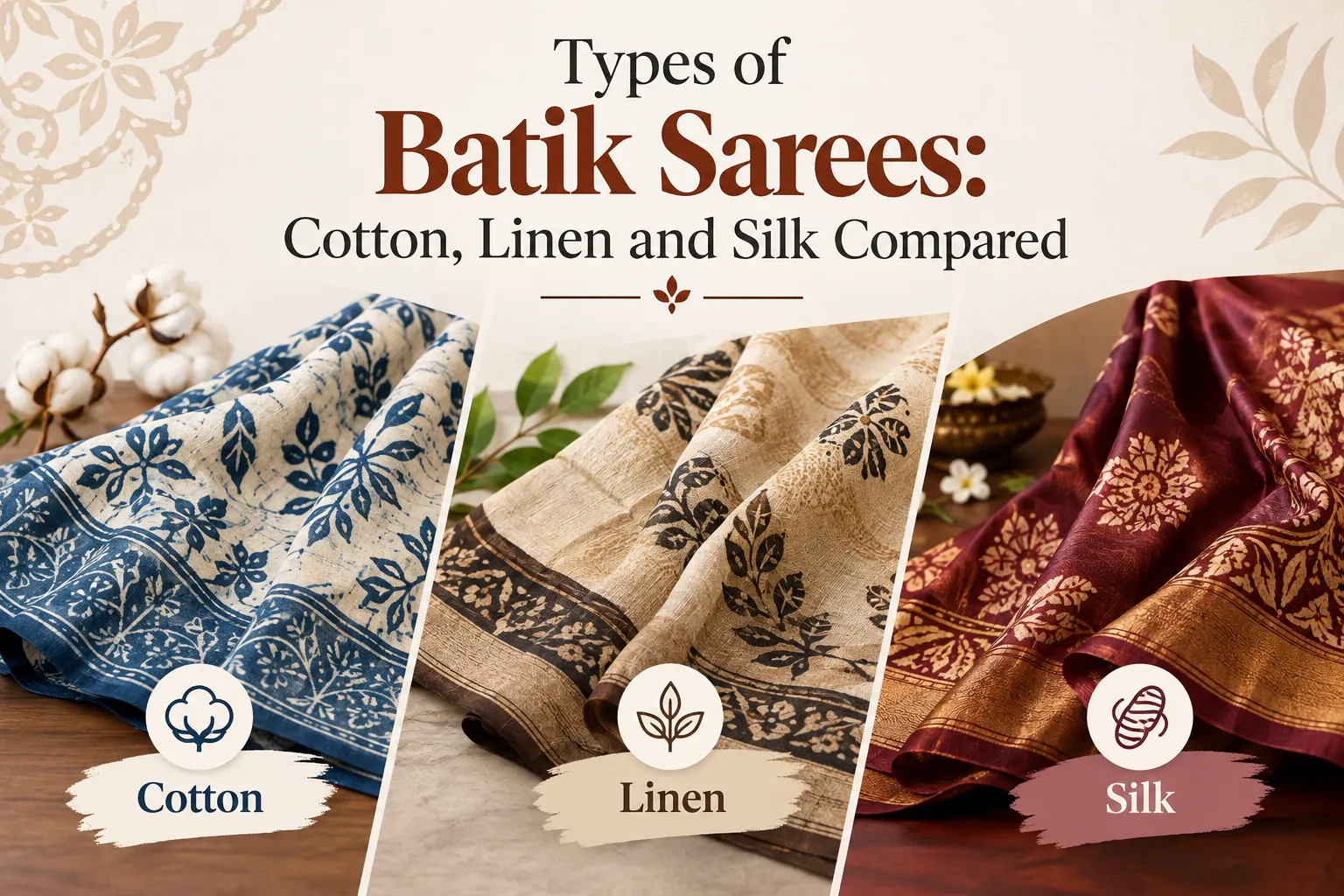
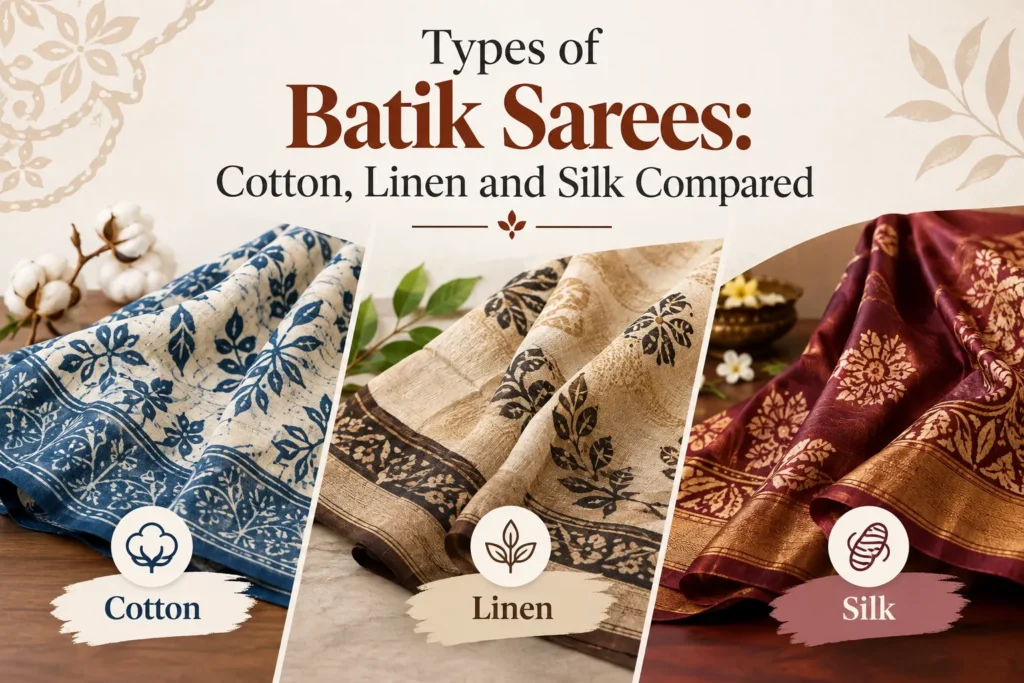
A batik print cotton saree feels light and forgiving, made for the days you don’t want to think about your outfit. Linen holds its shape and shows off the wax-resist pattern with a crisp, almost structured texture. Silk turns the same technique into something you’d save for a wedding or a Puja evening, glossier, heavier, and dressier.
Quick answer: Pick cotton for everyday comfort, linen if you like a textured, structured drape, and silk when the occasion is dressy enough to deserve it. The right pick comes down to weather, where you’re wearing it, and how much upkeep you’re willing to do.
What Is a Batik Saree?
Batik is a wax-resist dyeing technique old enough that UNESCO added it to its Representative List of Intangible Cultural Heritage in 2009. On fabric, it works like this: wax goes down first, over the areas meant to keep their original colour, then the cloth goes into a dye bath. Wherever the wax sits, the dye can’t reach it. Artisans repeat this waxing-and-dyeing cycle to build up layers of colour and pattern, and the fine cracks that form in the wax as it dries let a little dye bleed through — which is exactly where that crackled look comes from.
Cotton, linen and silk all take to Batik work, but not in the same way. The base fabric decides how the final saree drapes, how the colours sit, and how sharp or soft the pattern edges look. That’s why two sarees using the same Batik motif can feel like completely different garments once you see them in cotton versus silk.
What Are the Main Types of Batik Sarees?
Sorted by fabric, Batik sarees fall into three groups: cotton, linen and silk. You’ll also come across blends, so it’s worth checking the actual fabric composition on the product tag rather than guessing from how a saree looks in photos.
| Type | General Feel | Suited For | Styling Character |
| Cotton Batik Saree | Soft and breathable | Everyday, casual and office wear | Relaxed and traditional |
| Linen Batik Saree | Textured, more structured | Work, daytime events, smart-casual looks | Contemporary and elegant |
| Silk Batik Saree | Smoother or richer, depending on the silk | Festive and special occasions | Dressier and refined |
1. Batik Print Cotton Saree: The One You Reach for Most
A batik print cotton saree brings together two things that work well as a pair: cotton’s comfort and Batik’s handcrafted look. Cotton takes dye evenly, which is part of why it’s the fabric most Batik artisans reach for first, and it’s forgiving to work with through the waxing and dyeing stages. The payoff for the wearer is a saree that breathes — a batik cotton saree suits a humid Kolkata afternoon or a long office day far better than a heavier fabric would.
When to Wear a Cotton Batik Saree
Cotton Batik earns its keep at the office, on casual outings, at daytime college programmes, at family get-togethers, and right through a hot Bengal summer. It isn’t a saree you save for one occasion. It’s one you can wear on a Tuesday.
How to Style It
Keep it simple: a solid-colour blouse and a few pieces of jewellery let a busy Batik pattern do the talking. If your saree leans plain, swap in a contrasting or handloom-textured blouse and oxidised jewellery for a bit of ethnic edge.
This is the Batik saree to reach for when you want something you don’t have to think too hard about styling.
2. Linen Batik Saree: Where Texture Does the Talking
If you want a Batik saree with more structure and a fall that holds its shape, a linen batik print saree is worth a look. Linen has its own grain, and Batik’s crackled lines sit differently on it than they do on smoother cotton — the combination reads as more contemporary. That’s exactly why batik print linen sarees have found a following among people who like the traditional craft but want it presented in a slightly newer way.
When to Wear a Linen Batik Saree
Office meetings, daytime celebrations, cultural events and art or craft exhibitions all suit a linen Batik saree. It also works for casual gatherings where you want to look put together without visibly trying.
How to Style It
A fitted, plain blouse balances a heavily patterned linen Batik saree. If the pattern is more restrained, try a textured or contrasting blouse instead. Statement earrings, paired with either a neat bun or loose, natural hair, round off the look without overcrowding it.
Linen Batik rewards anyone who wants their traditional wear to carry a contemporary edge.
3. Batik Silk Sarees: The Dressier Choice
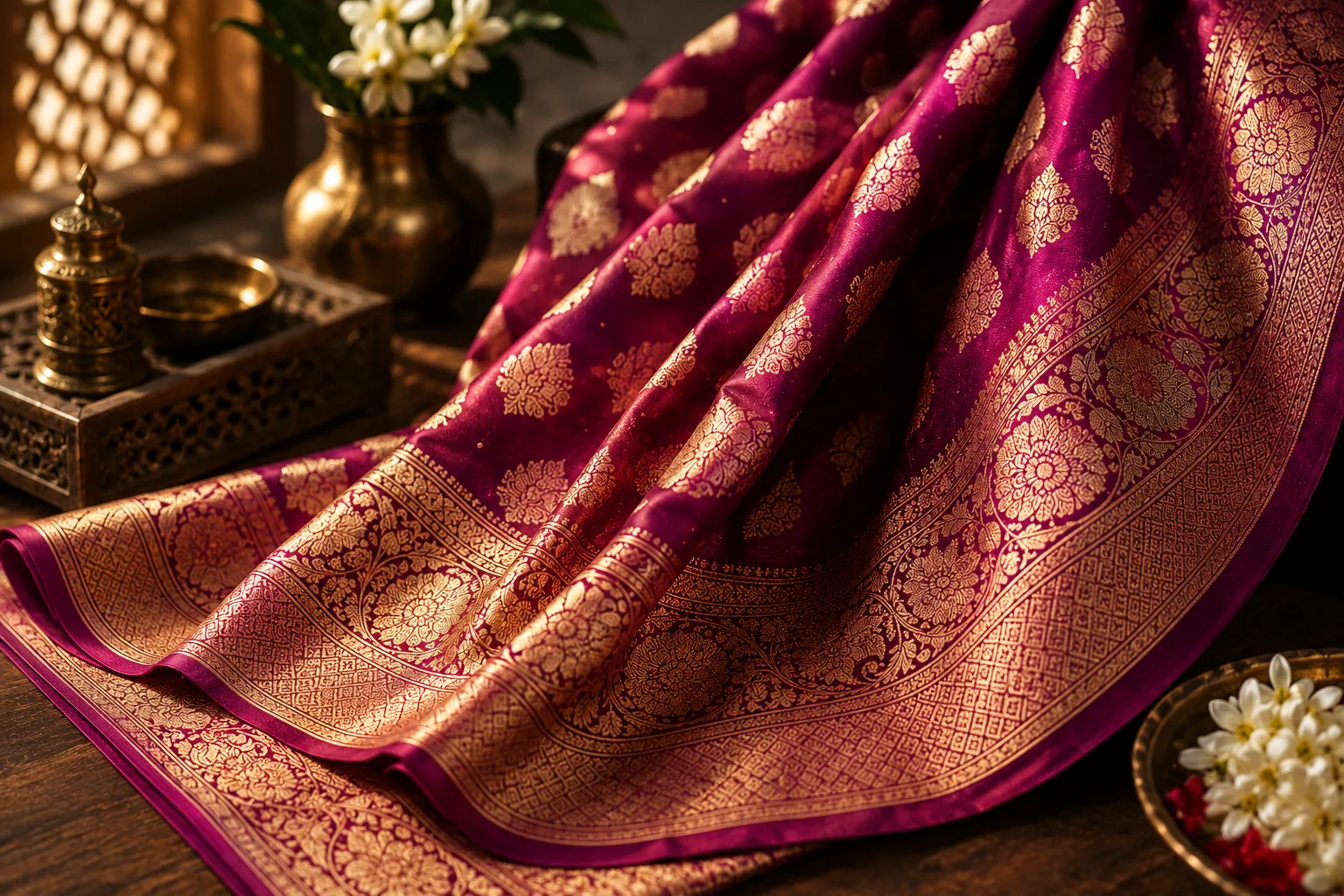
For occasions that call for something richer, batik silk sarees step in. Silk holds Batik’s wax-resist patterns while adding its own sheen and weight, and if you’re eyeing a batik print silk saree for a wedding or a big Puja evening, it usually photographs better under evening light than any other fabric in this list.
When to Wear a Batik Silk Saree
Festive gatherings, wedding-season celebrations, evening events, cultural functions, and major family occasions all call for silk Batik.
How to Style It
Let a statement blouse and traditional or elegant jewellery carry the festive mood. Silk Batik doesn’t need much convincing to look special; it already does most of the work on its own.
Cotton vs Linen vs Silk Batik Saree: Which Should You Buy?
None of the three fabrics is objectively “better.” What matters is where you’re wearing the saree and how it should feel against your skin.
Go with cotton if comfort and everyday wear top your list. Pick linen if you want visible texture and a saree that holds its shape through a long day. Choose silk when the occasion is dressy enough to deserve it.
| Your Priority | Consider |
| Everyday comfort | Cotton Batik |
| Warm-weather regular wear | Cotton Batik |
| Textured appearance | Linen Batik |
| Office or smart daytime styling | Cotton or Linen Batik |
| Contemporary styling | Linen Batik |
| Festive styling | Silk Batik |
| Richer appearance | Silk Batik |
One caveat worth remembering: no two sarees behave identically even within the same fabric category. Weave, thickness, dye process and finishing all change how a saree drapes, so treat this table as a starting point, not a guarantee.
Which Batik Saree Works Best in Summer?
Cotton is the safer bet for peak summer heat, and linen isn’t far behind if you like its texture enough to put up with a bit more creasing.
Both are natural fibres that handle heat reasonably well, though they don’t feel identical against the skin. Cotton is softer and more familiar to most wearers. Linen has a crisper hand, and it creases in a way that’s part of its character rather than a flaw.
If you’d rather not think about it, go cotton. If a structured, slightly rumpled look appeals to you, linen is worth the trade-off.
Which Batik Saree Suits Office Wear?
Cotton and linen both hold up well in a workplace setting.
For a professional look, stick to balanced colours, pair the saree with a simple blouse, and keep accessories minimal. A comfortable drape matters more at the office than anywhere else, since you’ll likely be wearing it for eight hours straight and not just for a few photos.
Batik’s pattern already adds visual interest on its own, so there’s no need to layer on heavy embellishment for it to stand out in a meeting room.
How to Choose the Right Batik Saree
Colour shouldn’t be the only thing deciding your purchase.
Think about fabric, occasion, pattern size and how much care the saree will need. A simple cotton Batik works for regular wear; save the more elaborate silk pieces for occasions that deserve them. Look past the dominant colour too, and check the shades used within the Batik pattern itself, since that’s what determines how easily the saree pairs with blouses and jewellery you already own.
Large Batik motifs make a bolder statement. Smaller, more restrained patterns are usually easier to wear again and again. And always read the care label before you buy, not after.
How to Style a Batik Saree for Any Occasion
Batik’s biggest strength is how far it stretches: the same saree can look traditional, artistic or contemporary depending on what you pair it with.
For a traditional look, add a contrasting blouse, a bindi, jhumkas and bangles. Keep it simple for the office with a plain blouse and small earrings. Want something more contemporary? Try a structured blouse or a belt, as long as it doesn’t compete with the Batik pattern for attention. For festive settings, a dressier blouse and statement jewellery can lift a silk or heavily patterned Batik saree into event-ready territory.
If your saree already carries a bold pattern, resist the urge to add more. Batik does better with restraint than with competition.
What Blouse Pairs Well With a Batik Saree?
A solid-colour blouse is the easiest match for a Batik saree, mainly because it lets the pattern stay the focus.
You can pick a blouse in a shade already present in the saree for a coordinated look, or go contrasting for something bolder. Cotton, handloom-textured, sleeveless and high-neck blouses all work, depending on the occasion. There’s no fixed rule here — let the Batik pattern decide.
How to Wash and Care for a Batik Saree
The fabric and the dyeing process both affect how a Batik saree should be washed, so the care label on your specific saree always takes priority over general advice.
A few habits apply broadly: check the label before the first wash, skip harsh detergents unless the label allows them, don’t let a dyed saree soak longer than necessary, avoid wringing or rough handling, dry it the way the fabric calls for, and store it clean and completely dry.
For silk, heavily embellished or strongly dyed Batik sarees, a trip to a professional cleaner is often the safer call, especially before the first wash.
Where to Explore Batik Print Sarees
Once you know how cotton, linen and silk Batik sarees differ, the actual shopping part gets a lot easier.
Browse the Batik Print Saree Collection from Loominators to see how these fabrics look in real designs. Whichever one you pick, choose for your comfort and your wardrobe first — the occasion will take care of itself.
Frequently Asked Questions About Batik Sarees
What are the different types of Batik sarees?
Batik sarees are usually classified by fabric. Cotton, linen and silk are the three most common, and each gives the saree a different texture, drape and overall look.
Which fabric is best for a Batik saree?
There’s no universal answer. Cotton suits everyday comfort, linen suits a textured and structured look, and silk suits festive, dressier occasions. Match the fabric to your occasion, the weather, and how much maintenance you’re willing to handle.
Are Batik cotton sarees good for summer?
Yes, generally. Cotton is breathable, which makes a batik cotton saree a practical warm-weather pick. The specific weave and thickness of the saree will still affect how it feels.
What is the difference between cotton and linen Batik sarees?
Cotton feels softer and more familiar. Linen has a crisper, more textured hand and creases more visibly, which many people consider part of its character rather than a downside.
Can Batik sarees be worn to the office?
Yes. Cotton and linen Batik sarees both work well for office wear when you pick balanced colours and keep the styling simple.
Can I wear a Batik saree for a festive occasion?
Yes, especially in silk or in a more elaborate Batik design. These read as dressier and suit weddings, Puja and other celebrations.
How should I wash a Batik saree?
Follow the care label for your specific saree. Cotton, linen and silk all need slightly different handling, and any dye or embellishment can call for extra care.
What makes Batik patterns so distinctive?
The wax-resist process. Wax blocks dye from reaching certain areas of the fabric, and the fine cracks that form in that wax as it dries let small amounts of dye through, creating Batik’s signature crackled lines.