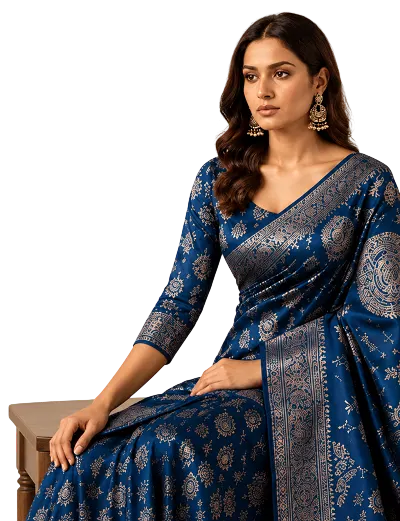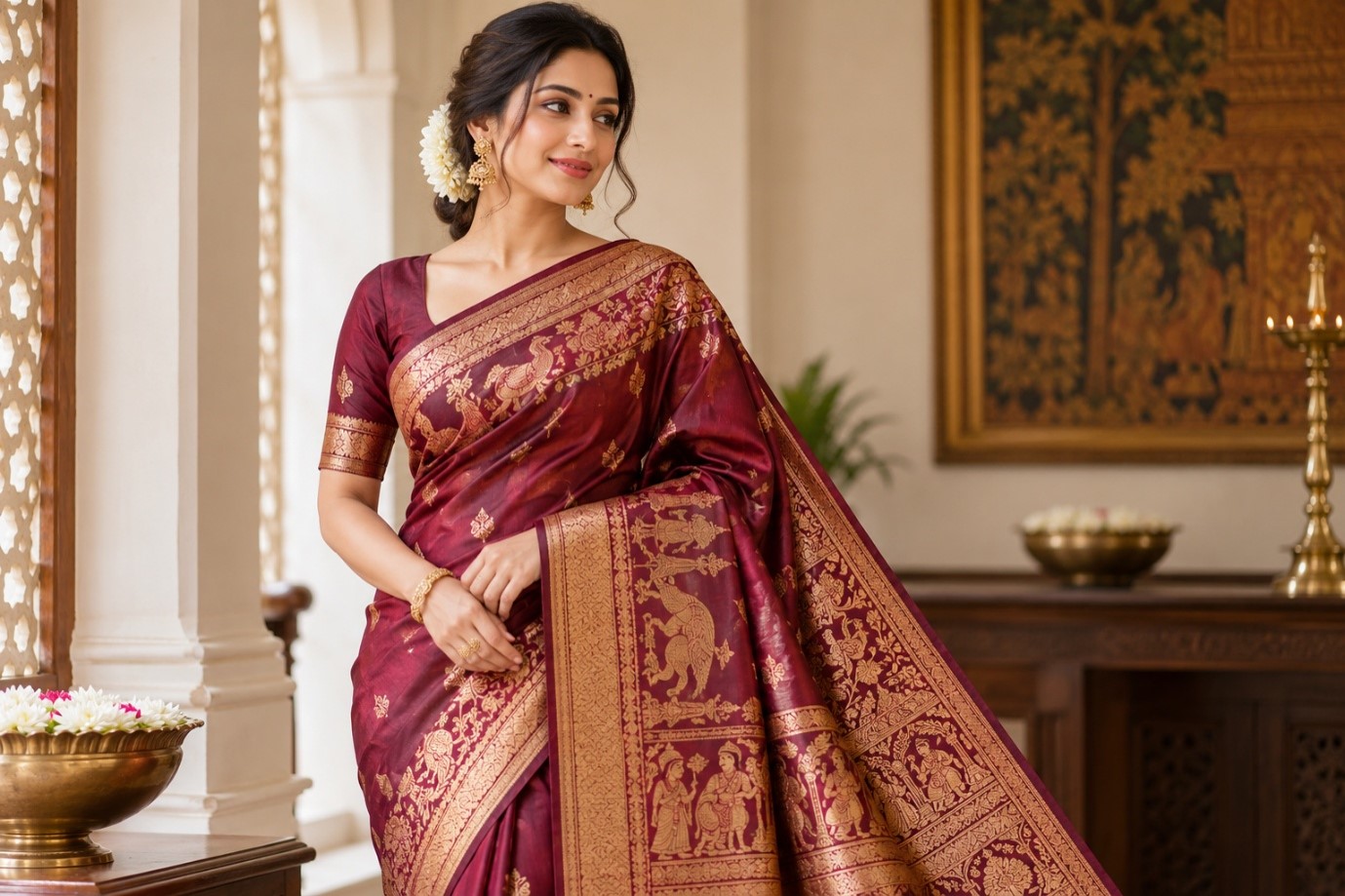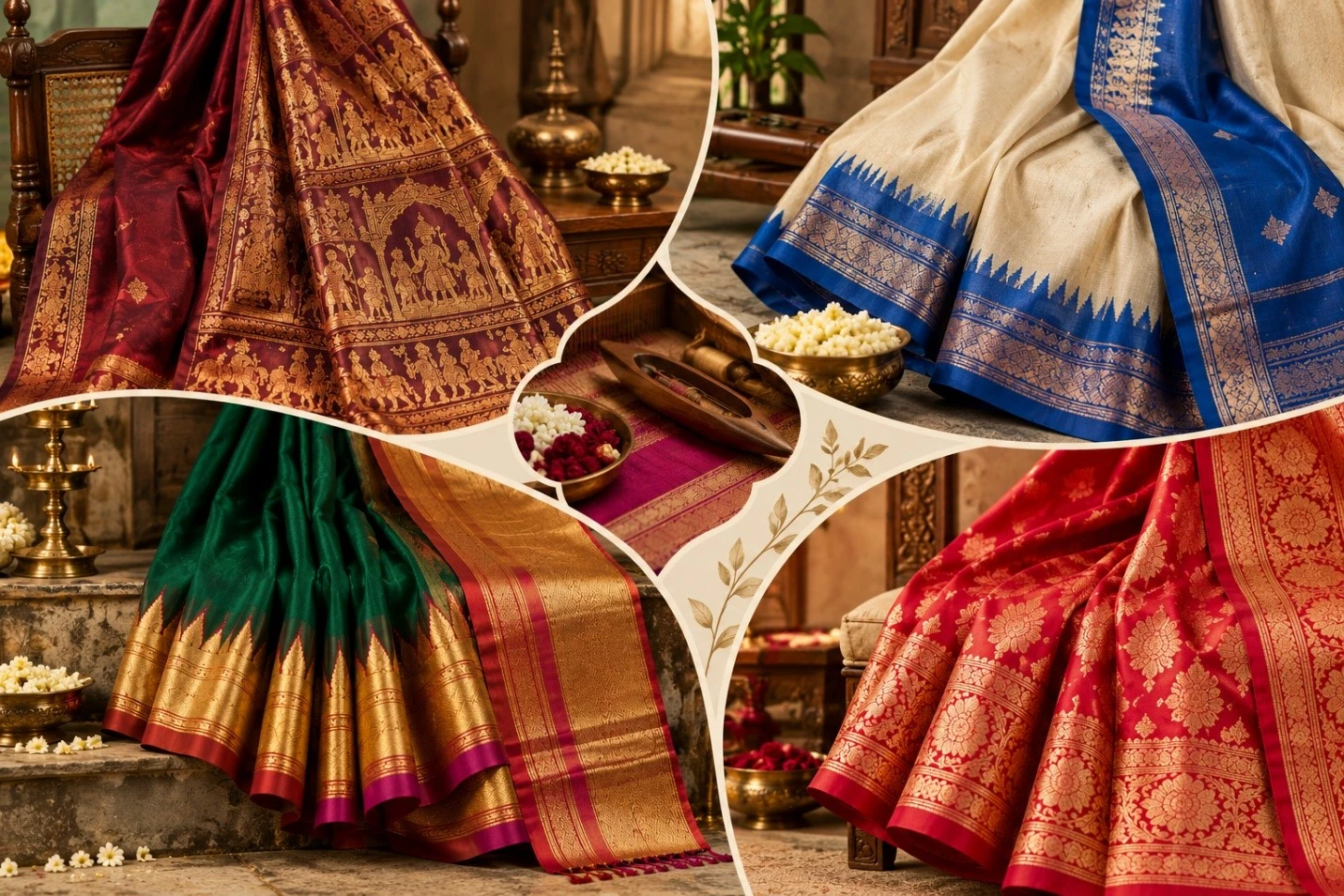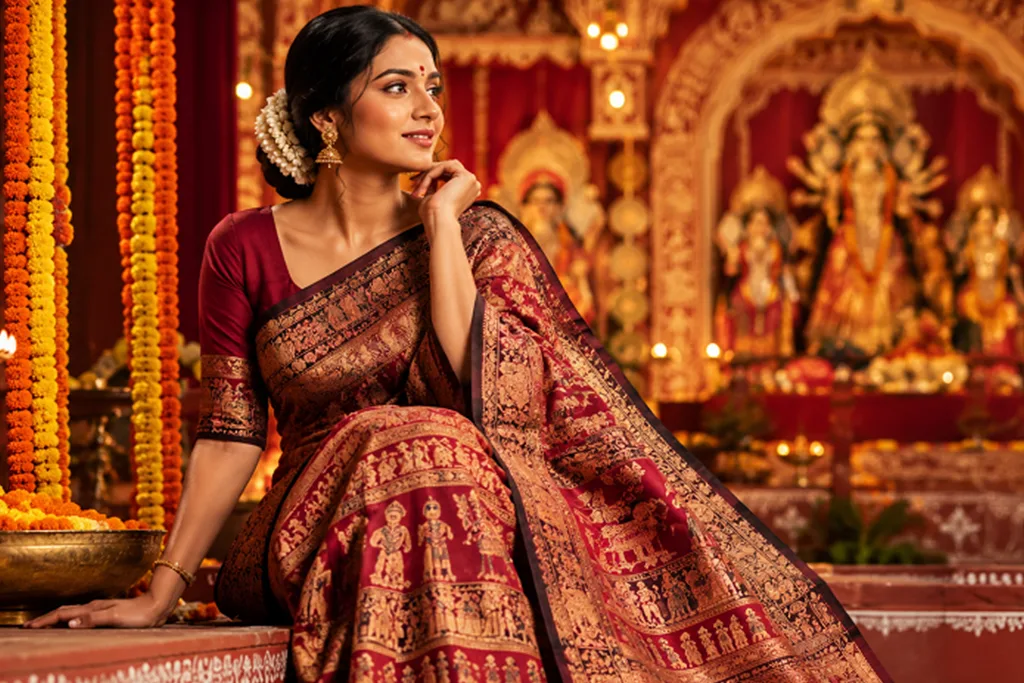

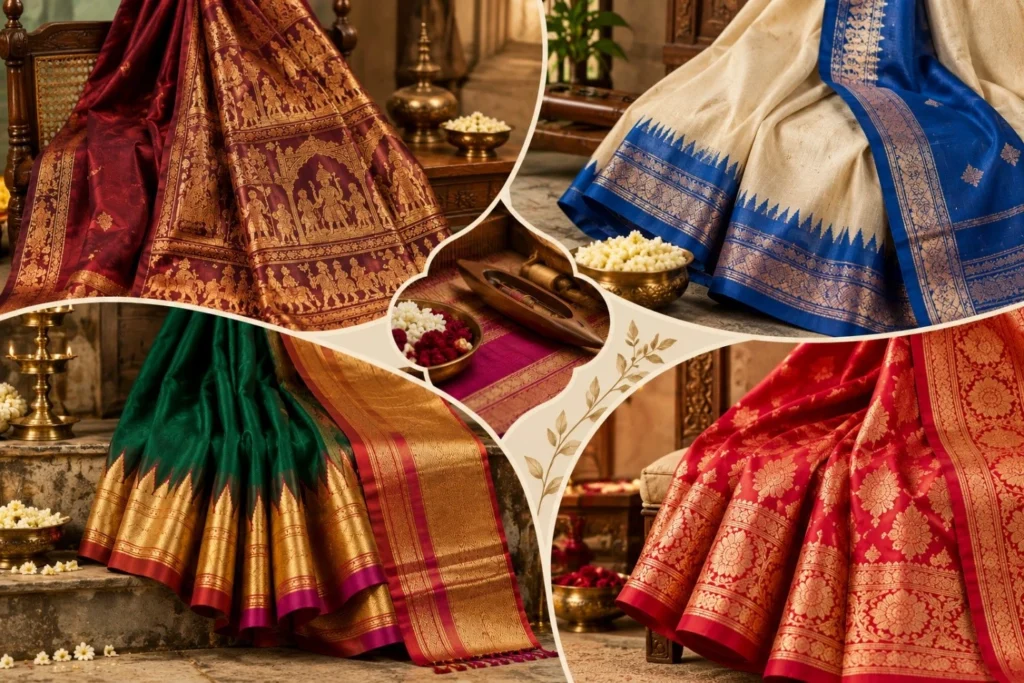
The latest wedding sarees collection for bride in 2026 leans towards handwoven silk over heavy stonework. Think Banarasi katan, Bengal’s own Baluchari and Swarnachari, Bishnupuri katan and temple-border Kanjivaram, in colours that go well beyond the classic lal-paar red. That’s the short answer.
The longer one depends on your rituals, your budget, and how many times you’ll realistically wear the saree after the wedding.
We put this guide together at Loominators after a full season of WhatsApp threads with brides and their mothers. Almost all of them asked a version of the same two things. Which saree works for which ceremony, and how do I know the silk is real when I’m buying online? This page answers both, weave by weave and ritual by ritual, with the checks we’d run ourselves before paying for any marriage saree for bride.
What brides are actually picking this wedding season
Red hasn’t gone anywhere. Brides still ask for it more than any other colour, especially for the main ceremony. What has changed is everything around it.
The first shift is towards weight you can carry. A georgette saree loaded with sequins and stones looks lovely on the hanger, but after six hours of rituals under studio lights, brides feel every bit of it. Handwoven katan silk drapes heavier than chiffon but breathes far better, which is why so many 2026 brides are choosing a pure silk weave for the pheras and saving embellished pieces for the reception.
The second is colour. Rani pink, deep wine, bottle green and even mustard with a red border now show up in wedding bride saree collection shortlists we see. Mothers sometimes push back. Our honest view is that if the border and the anchal carry red or gold, the saree reads as bridal in photos, whatever the body colour.
The third shift is meaning. More brides want a saree with a story behind it: a Baluchari pallu showing scenes from the Ramayana, or a weave tied to their grandmother’s district.
The latest wedding sarees collection for bride, weave by weave
Bengal still weaves a large share of India’s handlooms. The Fourth All India Handloom Census (2019-20) counted 3.4 lakh weaving households in West Bengal, second only to Assam. Here’s how the main bridal weaves in our saree collection compare once you’re past the product photos.
Banarasi katan silk
The default bridal choice across North and East India, and for good reason. Katan is pure silk yarn twisted tight, so the saree holds its fall and the zari brocade sits crisp. Go for it if you want the most traditional look in your wedding album. Tissue Banarasi is the lighter cousin, with a metallic sheen that photographs beautifully under evening lights.
Baluchari and Swarnachari
If you’re a Bengali bride, this is the one people will ask about. A Baluchari pallu tells a story, usually from the Ramayana or Mahabharata, woven in silk thread. Swarnachari does the same with gold-toned zari. According to the Ministry of Culture’s Indian Culture portal, Baluchari received its GI tag in 2011 and a single saree can take a week or more on the jacquard loom. We often suggest it for the bou bhaat rather than the biye, because the pallu deserves to be seen and the main ceremony keeps it tucked under a veil.
Bishnupuri katan silk
Lighter than Banarasi and softer than most people expect. Bishnupuri silk comes from the same Bankura belt as Baluchari and carries simpler buttis with a clean border. It’s the one we recommend most for brides who’ll wear their saree again at family weddings, pujos and anniversaries.
Temple border and Korvai silk
The contrast temple border (a red body with a green or gold korvai edge, for example) is a South Indian classic that works surprisingly well at Bengali and Marwari weddings too. The fabric is dense. Expect a stiffer drape that holds pleats all evening.
Tussar with Kantha work
Not a pheras saree, honestly. But for the aashirbaad, a mehendi afternoon or the first visit to the in-laws, a hand-embroidered Kantha tussar looks personal in a way factory embroidery never quite does.
Which marriage saree for bride suits each ritual
Most brides need three to five sarees across the wedding week, not one. Matching weave to occasion saves money and saves you from wearing your heaviest silk on the day you’re sitting cross-legged on the floor for two hours.
| Ceremony | Saree We’d Pick | Why It Works |
|---|---|---|
| Aashirbaad / Roka | Kantha tussar or a light Bishnupuri silk | Daytime, family-only, photos are close-up. |
| Gaye Holud / Haldi | Yellow or red-bordered cotton or a soft silk you don’t mind staining | Turmeric stains silk permanently. |
| Biye / Pheras | Red or rani Banarasi katan, or a temple-border silk | Holds pleats for hours, reads as bridal on camera. |
| Bou Bhaat | Baluchari or Swarnachari | The pallu is on display, not under a veil. |
| Reception | Tissue Banarasi or a jewel-toned silk | Catches stage lighting, feels lighter for a long evening. |
If your family has a fixed custom, like a Banarasi from the groom’s side for the sindoor daan, plan the rest of the week around it.
How to tell if a bridal silk saree is genuine
This is where most online buyers get burnt. Art silk and polyester blends now copy the sheen of katan closely enough to fool a phone camera, and sometimes a relative’s eye too.
Start with the paperwork. The Silk Mark is a quality label run by the Silk Mark Organisation of India under the Central Silk Board, Ministry of Textiles, and it has been around since 2004. Each label carries a hologram and a unique number you can trace back to the authorised seller. Kolkata has a regional SMOI office on Gariahat Road if you ever want a doubtful piece checked. For Baluchari specifically, the GI registration means the name legally belongs to sarees from the Bankura region.
Then check the saree itself when it arrives:
- Turn it over. Handwoven brocade shows small floats and the odd irregular thread on the reverse. A perfectly flat, uniform back usually means a powerloom.
- Rub a corner between your palms for 20 seconds. Pure silk warms up. Polyester stays cool and slightly slippery.
- Look at the zari edge under daylight. Tested zari has a soft, slightly muted glow, while cheap metallic thread looks almost plasticky.
The burn test you’ll see on YouTube works, but please don’t snip your wedding saree. Ask the seller for a thread sample instead. Any honest weaver or store will send one.
What a bridal saree costs, and where the money goes
Three things drive the price of a handwoven wedding saree: the silk count, the type of zari, and the hours on the loom.
| Weave | Rough Price Range (Handloom, 2026) |
|---|---|
| Bishnupuri Katan Silk | ₹6,000 to ₹25,000 |
| Tussar with Hand Kantha | ₹5,000 to ₹30,000 |
| Baluchari / Swarnachari | ₹8,000 to ₹1.5 lakh |
| Banarasi Katan (Handloom) | ₹15,000 to ₹1 lakh and above |
These are broad market ranges, not fixed prices, and real zari pushes any of them higher. A Bishnupur weaver quoted around ₹1.5 lakh for a single high-end Baluchari to VillageSquare, which tells you where the ceiling sits.
Our practical advice: spend the most on the pheras saree, keep the haldi saree cheap, and put the middle of your budget into the bou bhaat or reception piece, since that’s the one you’ll wear again.
Mistakes we see brides make when buying online
The most common one is ordering too late. A handwoven silk saree may need a fall, pico and a blouse stitched from its own blouse piece, and Kolkata tailors are booked solid from Agrahayan through Magh. Order at least eight weeks before the wedding. Twelve is safer.
A close second is trusting the screen. Product photos are shot under softbox lights, and a deep maroon can look like bright red on one phone and brown on another. Ask the seller for a short video in natural daylight. A good store won’t mind, and you’d be surprised how often a bride changes her mind after seeing one.
Some brides also choose a saree for the photo and forget the person wearing it. If you’re under five feet two, a very wide Baluchari border can swallow you. If the venue is an open-air lawn in Rajarhat in late spring, heavy brocade will be miserable by the second hour.
And check the blouse piece length. Some sarees carry 80 cm, others a full metre, which matters if you want elbow-length sleeves.
Bridal saree FAQs
Which saree is best for a bride on the wedding day?
A red or rani pink Banarasi katan silk is the safest pick for the main ceremony. It holds its drape through long rituals and photographs as unmistakably bridal.
What colour is trending for brides in 2026?
Red still leads. Wine, rani pink and emerald green are the most popular alternatives, usually with a gold or red border.
How early should I buy my marriage saree?
Eight to twelve weeks before the wedding. That leaves time for a fall, pico, blouse stitching and one exchange if the colour isn’t right.
Is it safe to buy a wedding silk saree online?
Yes, if the seller shares clear daylight photos, states the silk and zari type, and offers a return or exchange window. For pure silk, ask whether the piece carries a Silk Mark label.
Can I wear a Baluchari for my wedding instead of a Banarasi?
Absolutely. Many Bengali brides wear Baluchari for the bou bhaat, and some wear it for the biye itself. Just pick a red or maroon base with a pallu you love, because guests will notice it.
How do I store my bridal saree after the wedding?
Wrap it in plain muslin, not plastic, and refold it along different lines every two to three months so the zari doesn’t crack at the creases.
Where to start your shortlist
If you only have time for one decision this week, settle the pheras saree first. Everything else in your wedding bride saree collection can be planned around its colour.
Browse the handwoven saree collection at Loominators and filter by weave. Shortlist two or three, then message us for daylight videos and blouse piece details before you order. If your wedding falls in the Agrahayan or Magh season, do it now rather than after Diwali.